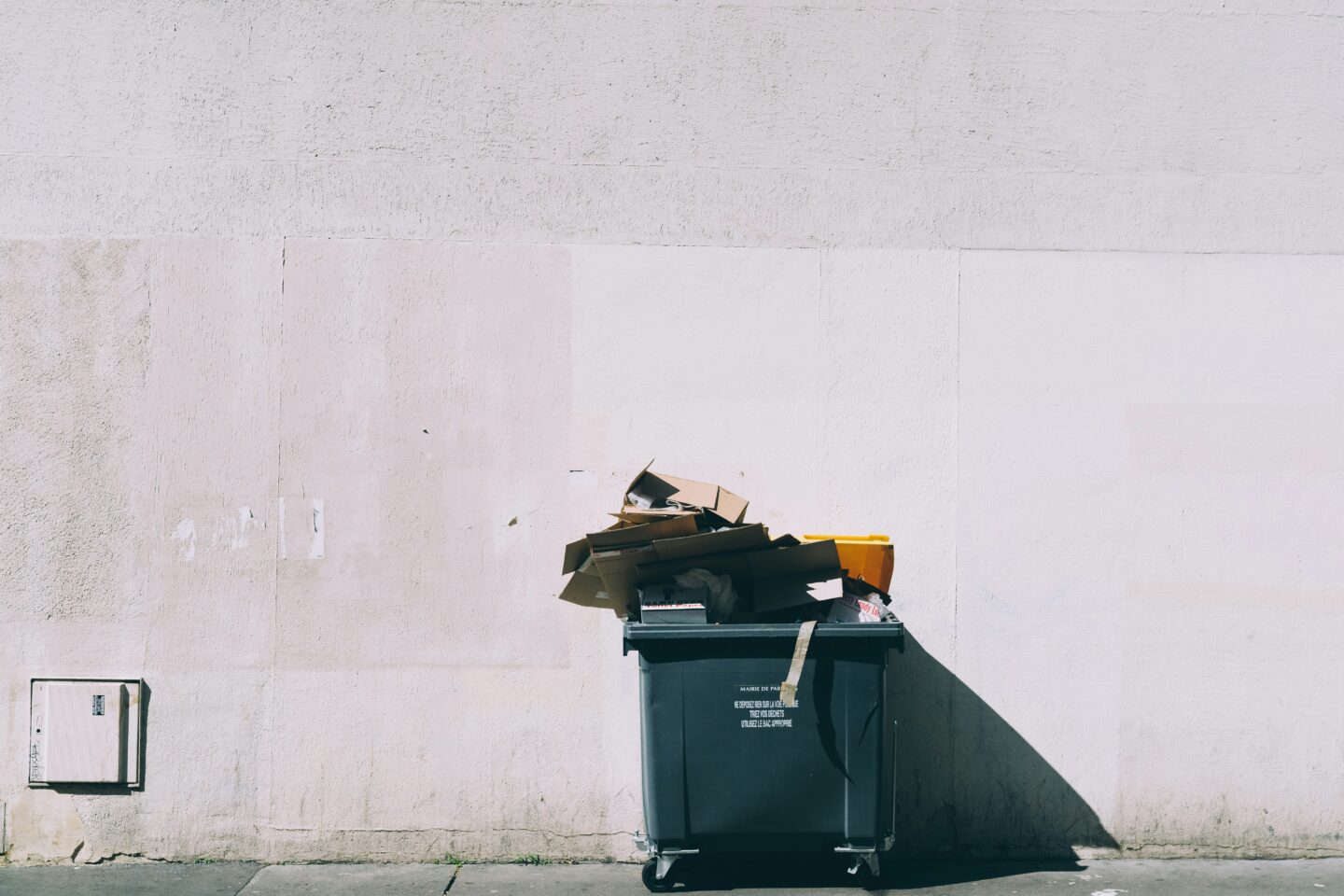
If your business produces any waste at all and every business does, UK law places a direct legal duty on you for how that waste is handled. Not on your landlord. Not on your cleaning contractor. Not on the man with a van who collected it last Tuesday. You. And the uncomfortable truth is that the majority of London businesses aren’t fully compliant with commercial waste removal regulations, not out of negligence, but simply because nobody told them what the rules actually are. This post sets that straight. See how commercial waste clearance should work then audit your own setup against it.
What Exactly Is Commercial Waste and Does Your Business Actually Produce It?
Yes. Every business produces commercial waste, regardless of size or sector.
Under the Environmental Protection Act 1990, any waste arising from a trade, business, or commercial activity is classified as controlled waste. This covers everything from office paper and packaging to food waste, broken equipment, refurbishment debris, and old furniture. It covers a sole trader working from a spare room just as much as it covers a 200-person office block.
The law does not offer a minimum threshold. There is no ‘small business exemption.’ If the waste was generated in the course of running your business, it is commercial waste, and the full legal framework applies to it.
This is the first place many businesses go wrong assuming that because they’re small, or because the amounts seem trivial, normal household collection or council bin services are sufficient. They are not. Using domestic waste services for commercial waste is itself an offence under the Act.
What Does UK Law Actually Say About Commercial Waste Removal?
Three legal obligations apply to every business generating waste in the UK. Most businesses are either unaware of one or more of them, or not meeting them in practice.
Duty of Care — Section 34, Environmental Protection Act 1990
Your legal responsibility for your waste does not end when it leaves your premises. Under the Duty of Care, your business remains liable for that waste until it reaches a licensed disposal or treatment facility. If the company you hired dumps it illegally in a lay-by, behind a retail park, in someone else’s skip you can face prosecution. Ignorance of what the carrier did with it is not a legal defence.
Registered Waste Carrier Requirement
Before hiring any company to remove your commercial waste, you are legally required to verify that they hold a valid Upper Tier Waste Carrier registration with the Environment Agency. This is not optional and not the carrier’s responsibility to volunteer it is your duty to check. The EA public register is searchable for free at gov.uk. Using an unregistered carrier is a breach of the Duty of Care, regardless of the outcome.
Waste Transfer Notes
Every single collection of commercial waste must be accompanied by a waste transfer note, a document recording what was collected, in what quantity, what type of waste it is, and where it’s going. Both parties sign it. You must retain your copy for a minimum of two years and produce it on request from any authorised enforcement officer. Businesses that can’t produce transfer notes during an inspection face immediate penalties, even if every collection was handled entirely legitimately.
What Are the Real Consequences If You Get It Wrong?
The enforcement picture has shifted significantly. The Environment Agency and local councils have both increased inspection activity targeting commercial premises in London, and penalties have become substantially less forgiving over the past five years.
The consequences of non-compliance include:
· Fixed penalty notices starting at £300 for Duty of Care violations
· Unlimited fines in the magistrates’ court for more serious or repeated offences
· Director-level criminal liability — waste offences can be prosecuted personally against company directors and sole traders, not just the business entity
· Clean-up cost liability — if your waste is identified at a fly-tip site, your business can be required to fund the full remediation, which in urban London can run to tens of thousands of pounds
· Public enforcement records — EA prosecutions and fixed penalty notices are published; for businesses that handle client premises, reputational damage can be immediate and severe
Sectors handling large volumes of waste are monitored most closely: construction, hospitality, healthcare, retail, and businesses undertaking office fit-outs or refurbishments. For post-fit-out clearance specifically, our office fitout waste removal service is designed to meet every compliance requirement from day one.
Where Do Most London Businesses Actually Go Wrong?
The most common compliance failures aren’t criminal — they’re administrative gaps that accumulate quietly over time.
Choosing carriers on price alone — The cheapest quote frequently comes from an unregistered operator. The saving of £30–£50 per collection becomes meaningless against a £300 fixed penalty or a fly-tipping investigation.
No system for waste transfer notes — Collections happen, notes are signed, then lost in a drawer or email thread. When an inspection occurs two years later, the documentation simply isn’t there.
Unclear responsibility in shared buildings — In multi-tenancy commercial spaces, businesses assume the building management or landlord handles compliance on their behalf. The law is clear: the occupying business retains Duty of Care for its own waste.
Incorrect handling of specialist waste streams — Fluorescent tubes, certain batteries, electrical equipment, and some cleaning chemicals are classified as hazardous waste and require separate handling, carrier registration, and consignment notes. Placing them in general commercial waste is a distinct additional offence.
Renovation and clearance waste treated as general waste Businesses refitting or clearing offices frequently hire whoever is available and cheapest. This is exactly the scenario most likely to result in illegal disposal. For full compliance on office clearances, our furniture and office clearance service handles documentation and disposal to the required standard.
How Do You Find a Fully Compliant Commercial Waste Removal Company in London?
Checking compliance takes less than five minutes and should be standard practice before any booking.
Verify EA registration — Search the Environment Agency’s public register. You need the company’s legal trading name. A genuine Upper Tier registration will be listed. If it isn’t, don’t proceed.
Ask for the waste transfer note proactively — A compliant carrier will issue one automatically. If you have to ask, or if they’re unfamiliar with the term, treat that as a serious warning sign.
Check public liability insurance — Ask for a copy of their current certificate. Any professional operator will provide this without hesitation.
Confirm disposal routes for specialist items — If your waste includes electrical equipment, hazardous materials, or construction debris, ask specifically how these are handled and what facilities they’re taken to. A licensed operator will answer this clearly.
For builders and contractors managing site waste, our builders’ waste removal service covers all of the above as standard, including full documentation for each collection.
Still Not Sure If Your Commercial Waste Removal Setup Is Compliant? We Can Help.
We Clear Junk has been handling commercial waste removal across London since 2006. Every collection is carried out by fully Environment Agency-registered carriers, every job comes with a waste transfer note, and every disposal route is through a licensed facility. Whether you need a one-off clearance or a regular commercial collection agreement, our team will make sure your business is covered — legally and practically.
Browse our full waste clearance services or get in touch for a straightforward quote with no hidden extras.
FAQs
1. What is commercial waste management?
Commercial waste management refers to how businesses handle, store, and dispose of waste produced from their daily operations in line with UK regulations.
2. Is every business legally responsible for its waste?
Yes. Under UK law, every business has a Duty of Care to ensure its waste is handled and disposed of legally, even after it leaves the premises.
3. What documents do I need for commercial waste removal?
You must receive and keep a waste transfer note for every collection. This proves your waste was handled legally and must be kept for at least two years.
4. What happens if my business uses an unlicensed waste carrier?
Using an unregistered carrier is a legal violation. You could face fines, liability for fly-tipping, and enforcement action even if you were unaware of the issue.
5. Where can I find compliant commercial waste removal services in London?
You can book fully compliant and licensed services through our commercial waste clearance page to ensure your business meets all legal requirements.



Leave a Reply