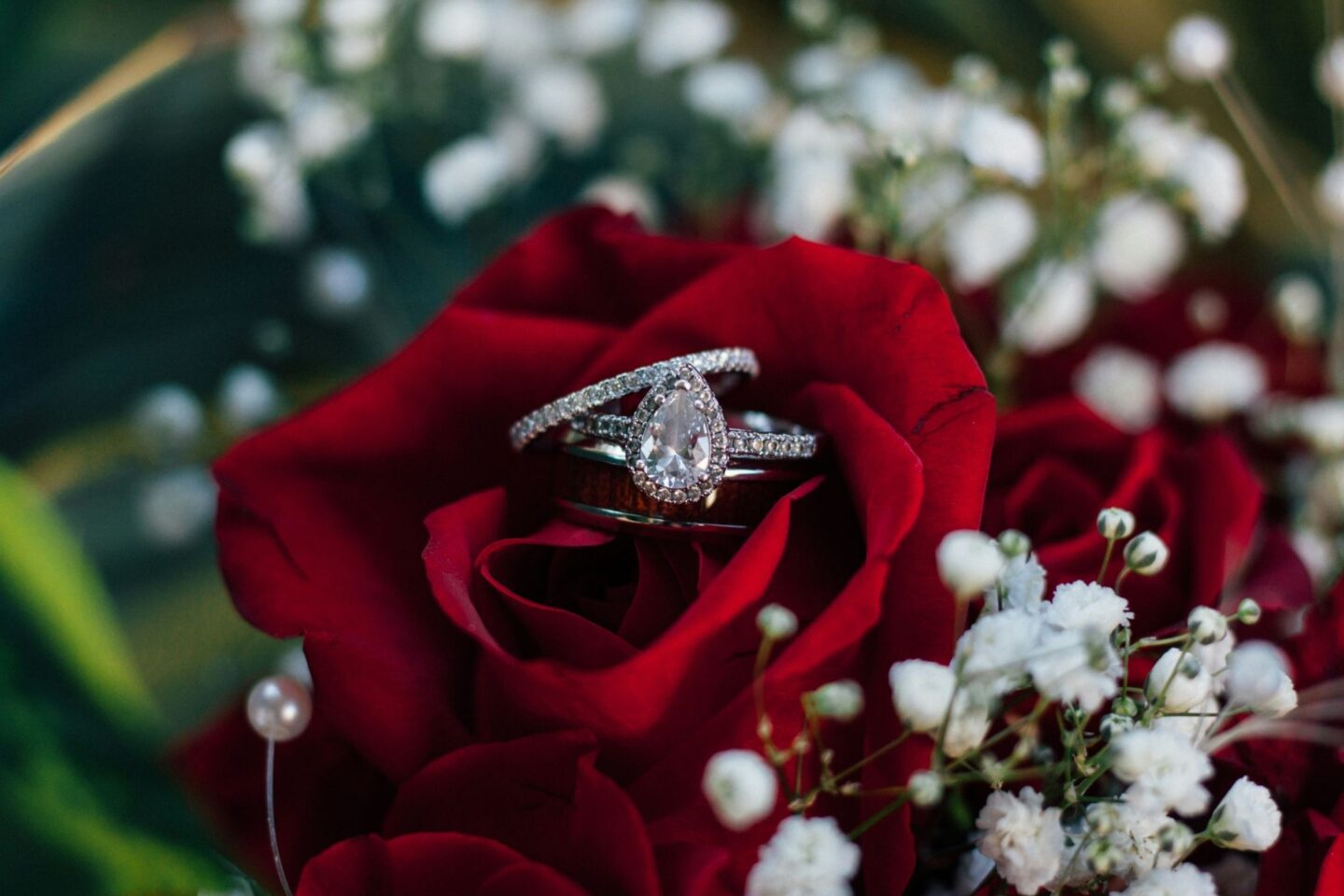
Among the many diamond cuts available today, the pear shape holds a unique position. Romantic and distinctive, teardrop or pear-cut engagement rings combine the brilliance of a round diamond with the elegant taper of a marquise, producing a silhouette that is immediately recognisable and genuinely unlike any other. The shape has been used in fine jewellery for centuries and continues to attract buyers who want a ring that stands out from more conventional options.
The History and Heritage of the Pear Shape
The pear-shaped diamond has a long history in fine jewellery. One of the most famous examples is the Cullinan I, part of the British Crown Jewels, which is a pear-shaped diamond cut from the largest gem-quality rough diamond ever discovered. The shape was developed in the 15th century and has been refined over the following centuries as cutting techniques improved. Today, a well-cut pear diamond features between 56 and 58 facets, arranged to maximise light return and minimise the bow-tie effect, which can reduce the brilliance of elongated cuts. The shape remains one of the most distinctive in the world of fine jewellery.
The Visual Characteristics of a Well-Cut Pear
A high-quality pear cut should be perfectly symmetrical, with the point at one end aligning precisely with the centre of the rounded end at the other. Any asymmetry in the outline is immediately visible once the stone is set, particularly in a solitaire or simple setting. The shoulders, the curves on either side of the stone between the point and the rounded top, should be smooth and even. A length-to-width ratio of between 1.50 and 1.75 is generally considered ideal for a classic pear shape. However, personal preference plays a significant role in what feels right for any individual buyer.
Choosing the Right Setting for a Pear Diamond
The pointed end of a pear diamond is its most vulnerable point, so choosing a setting is particularly important. A prong setting that includes a protective V-prong at the tip provides the best combination of security and visibility, shielding the fragile point while still allowing light to enter the stone from all angles. Bezel settings, which wrap a band of metal around the entire perimeter of the stone, offer maximum protection but obscure the diamond’s outline to some extent. Halo settings add sparkle around the pear while also providing some edge protection.
Wearing Orientation: Point Up or Point Down
One of the choices a buyer makes when setting a pear diamond is which direction the stone will point. Traditionally, pear diamonds are set with the point facing toward the fingertip, which creates an elongating effect that makes the finger appear more slender. Some buyers prefer the point facing toward the hand, or wear the ring turned sideways for an unconventional east-west orientation. There is no definitive rule: the choice comes down to what looks and feels right on the specific hand wearing the ring. Trying different orientations when trying on rings helps clarify which direction suits the wearer best.
Understanding the Bow-Tie Effect in Pear Cuts
Like oval and marquise cuts, pear-shaped diamonds can exhibit the bow-tie effect, a darkened area across the centre of the stone that resembles a bow tie when viewed from above. The bow-tie is caused by how the facets reflect light in elongated cuts, and some degree of it is present in virtually all pear diamonds. A skilled cutter minimises the bow-tie by optimising the depth and angle of the facets. When selecting a pear diamond, view the stone in various lighting conditions and from different angles before purchasing. A pronounced bow-tie significantly detracts from the overall beauty of the stone.
Complementary Wedding Bands for a Pear Ring
Finding the right wedding band to pair with a pear engagement ring can take more thought than with simpler shapes. The stone’s pointed end and curved silhouette mean that standard straight bands often create a visible gap between the rings. A shaped band designed to follow the contour of the pear setting creates a more polished and comfortable result. For buyers who prefer a more minimal approach, wearing the wedding band on the other hand entirely is also a practical solution that avoids the pairing challenge. Many bespoke jewellers offer to design a companion band specifically for the engagement ring to ensure a perfect visual match.



Leave a Reply