
Writing content and sending it to guest and editorial sites has been part of an era. Most of us have also started using AI in some way, whether for an outline, a headline or a first draft. So a fair question sits in front of every lifestyle writer now: is the content we used to pitch already old?
I went looking for an answer. The best explanations I found came from 3 pages, and none of them was a tips list. One is Google’s own guidance on helpful content, and the other 2 are write for us pages from sites that publish lifestyle content.
These Were The Lifestyle Topics Everyone Used To Pitch
Scroll back through any lifestyle blog from a few years ago and the same titles keep turning up:
- 10 Morning Habits Of Successful People
- 7 Self-Care Tips For Busy Moms
- Drink More Water, Sleep Early And Meditate For 10 Minutes
- 5 Ways Social Media Can Improve Your Lifestyle
- Your Winter Skincare Routine In 6 Steps
- 15 Healthy Habits To Start This Year
- How To Be More Productive Working From Home
Anybody could write these without having lived any of them, and AI can now write all 7 in under a minute. When a title can be filled by someone who has never done the thing, it is commodity content, and editors have started saying so out loud.
Google’s Own Page Asks The Questions A Writer Should Ask First
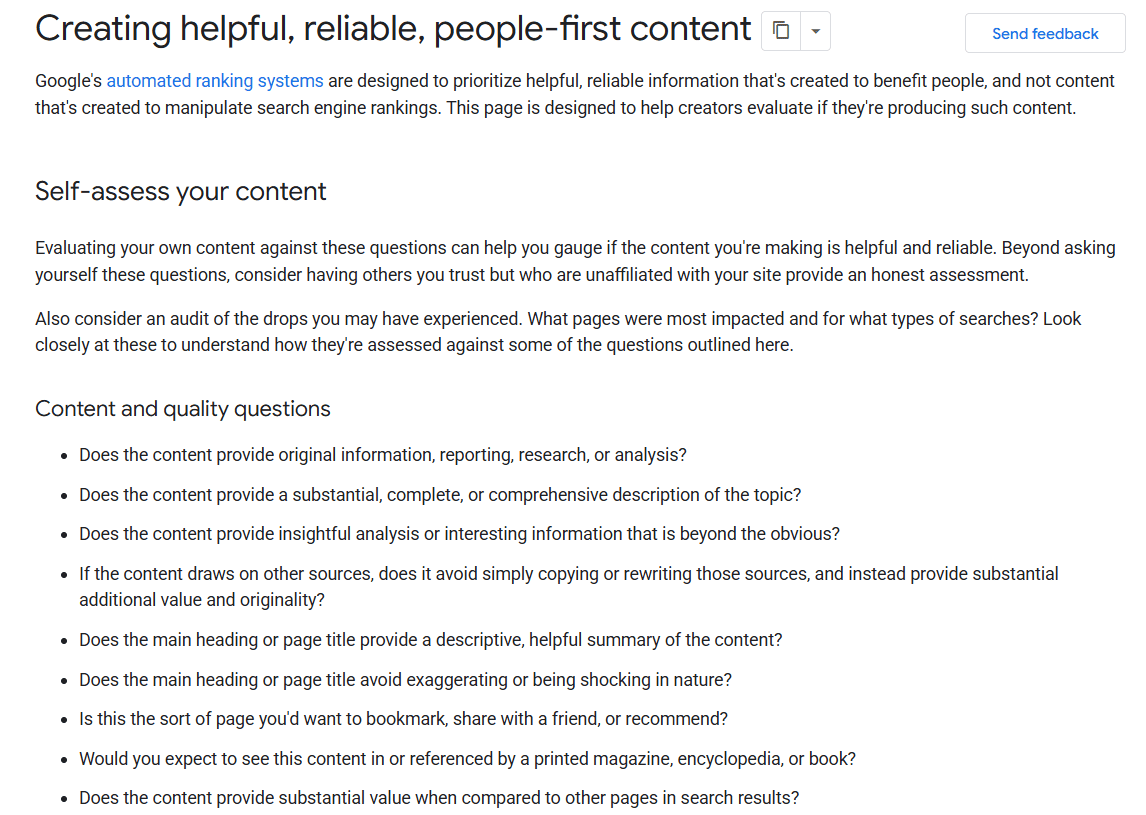
The first source is Google’s page on creating helpful, reliable, people-first content. It reads less like a rulebook and more like a self-test, and a lifestyle writer can run a draft through it in a few minutes:
- Does the content give original information or analysis beyond the obvious?
- Does it show first-hand experience, the kind that comes from actually using a product or visiting a place?
- Will the reader leave having learned enough to reach their goal?
- Is it clear who wrote it, how it was made and why it exists?
The line I keep coming back to is this one: “Attribution or giving credit to other sources doesn’t replace the need for original effort.” Rewording 3 other articles and linking them at the bottom does not count as effort under that line.
What I like most is an example tucked into the quality rater section. Google says a person sharing how they found a new way to clear snow from their driveway does not need specialised expertise. Real experience of an everyday problem is enough, and for lifestyle writers that is good news.
Discount Agent UK Turned Google’s Idea Into A Lifestyle Brief
The second page is the write for us page on Discount Agent UK, and I personally like how modern and adaptive its guidelines are, written in step with what Google now asks for. Instead of a list of accepted topics at the top, it opens by describing a writer who figured something out the hard way:
- Someone who tried morning routines for 3 years before one finally worked for their family
- Someone who came through a rough patch with money and built habits that helped their mental health too
- Someone who moved to a new city and had to rebuild a social life from nothing
The page then sets 2 titles side by side. “7 Tips for First-Time Homebuyers” could be written by anyone, while “Why We Waived the Inspection and Saved £15k” could only come from the person who crawled under the house and checked the sewer line. One is commodity content and the other is something only one writer could have produced.
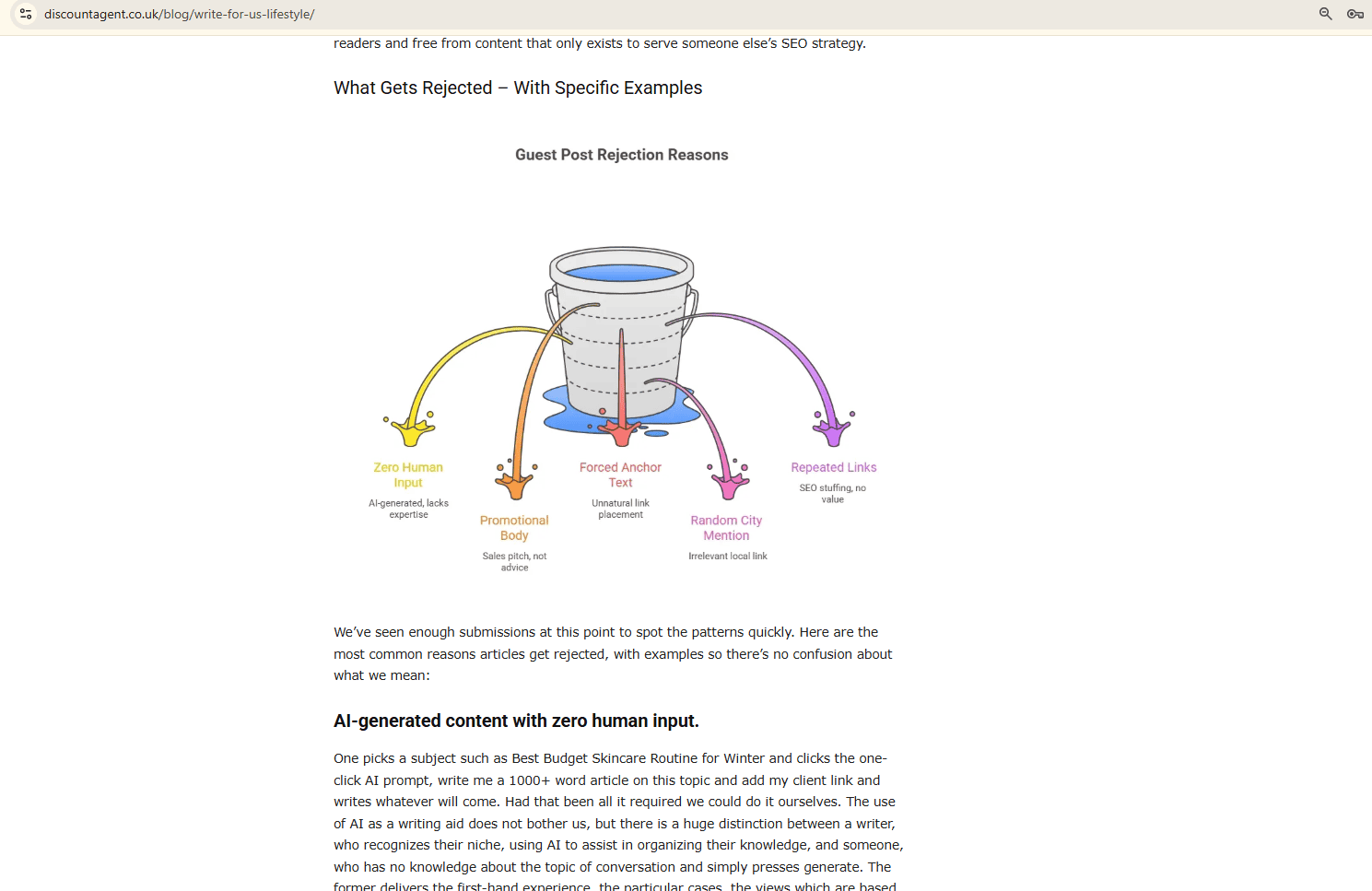
It also names what gets rejected, with examples so a writer does not have to guess:
- A one-click AI article with no human knowledge behind it
- A useful title with a sales pitch for the client underneath
- An anchor link forced into the opening paragraph
- A random city link dropped into a general UK article
- The same link repeated 3 to 5 times
My favourite part is the test it leaves writers with. Ask whether the article would still make sense and still be worth publishing with the link taken out. From what I have read on their blog, the posts they publish hold to that standard.
InstaFinsta Shows What A Lifestyle Topic Looks Like Now

The third page comes from InstaFinsta, a site people use to save Instagram reels and stories, and I find its way of presenting the brief very clever. In lifestyle it does not ask you to share 5 ways social media can improve your life. It starts from a reel a reader already saved and asks for the part a 30 second clip leaves out:
- A Get Ready With Me reel becomes the full routine, with product names, steps and swaps for each skin type
- A small room makeover reel becomes the item list, the budget and the layout
- A viral café reel becomes the location, the prices, the best time to go and the photo spots
- A wedding or Eid look becomes the fabric, the makeup, the jewellery and budget picks
The topic arrives already proven, because thousands of people saved the reel before anyone wrote a word about it.
The page treats brands the same way. If fans fall for a floral curtain in the background of a celebrity’s story, a curtain brand can explain the style and how to get the look at home. Its answer on AI made me laugh as well, since running AI text through QuillBot to lower the score is described as a real Hera Pheri scene.
I Now Ask Myself 3 Questions Before Writing A Lifestyle Piece
After reading all 3 pages, I keep a short check beside my desk:
- Have I actually done or lived the thing I am about to write about?
- What can I add that a reel, a tips list or an AI draft cannot?
- Would the article still be worth publishing with every link taken out?
If the answer to the first question is no, I either go and try it or I pick another topic. Writing with AI still has its place in my work, though the experience behind the words has to come from me.



Leave a Reply