Scandinavian cities have a particular talent for making everyday streets look beautifully composed. Painted wooden houses line harbourfronts, colourful facades brighten historic quarters, and water is rarely far from view. Add crisp northern light, carefully designed public spaces and a backdrop of islands, forests or mountains, and cities across Denmark, Sweden and Norway become particularly appealing for travellers who appreciate architecture as much as scenery. The beauty is not limited to postcard viewpoints. Copenhagen, Stockholm, Oslo and Bergen each have a different visual identity, shaped by geography and history. Together, they create an itinerary where urban exploration can easily be combined with waterfront walks, cafés, galleries and short excursions into the surrounding landscape.
Copenhagen’s Colourful Waterfront
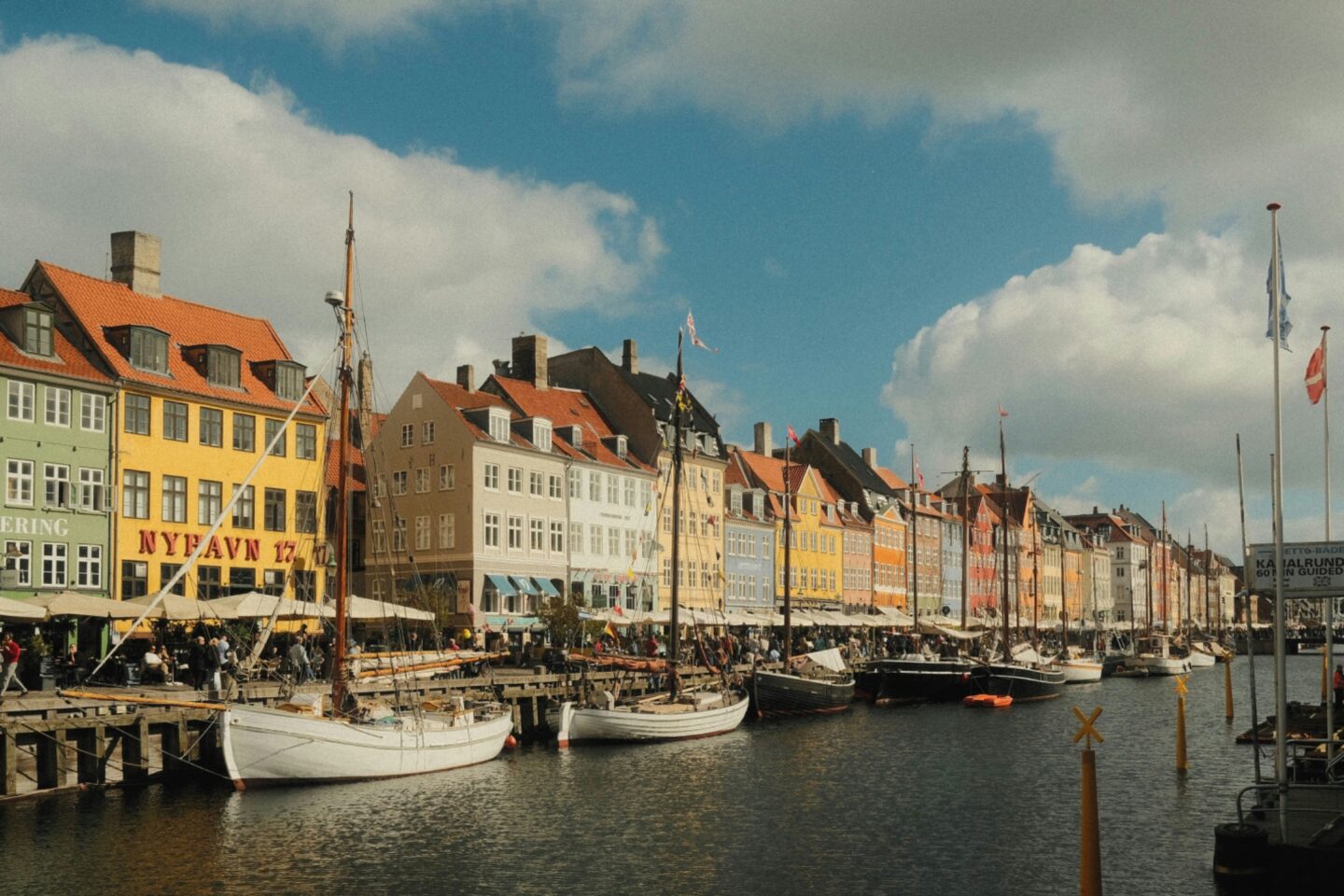
Copenhagen is an easy place to begin, particularly around Nyhavn. The famous harbour is lined with narrow, brightly painted buildings in shades ranging from soft yellow and peach to muted blue and green. Historic sailing boats sit along the canal, while cafés and restaurants occupy the ground floors, creating one of the city’s most recognisable scenes. Away from Nyhavn, Copenhagen’s prettiness becomes subtler. Streets around the old centre reveal elegant townhouses, cobbled lanes and quiet courtyards, while neighbourhoods such as Christianshavn introduce canals and rows of colourful homes. The city is also known for its thoughtful approach to public spaces, with bicycles, pedestrian areas and waterfront paths shaping the way people move through it.
From Stockholm’s Islands to Copenhagen’s Canals
Stockholm has a different relationship with water because the Swedish capital stretches across numerous islands. The result is a city where bridges, waterfront promenades and distant views appear throughout the urban landscape. Gamla Stan, with its ochre, rust-red and golden facades, provides the most historic expression of Stockholm’s colour palette. The journey between the two capitals can be part of the experience. Taking trains from Stockholm to Copenhagen allows travellers to watch the landscape shift from Swedish countryside towards Denmark, while avoiding the disruption of another airport transfer. Once in Copenhagen, the compact centre makes it easy to continue exploring on foot or by bicycle.
Stockholm’s Old Town in Soft Northern Light
Gamla Stan deserves more than a quick walk through its main street. The medieval quarter is filled with narrow passages, small squares and buildings painted in restrained shades of yellow, orange and red. Stortorget, the main square, is especially photogenic, with tall historic facades surrounding the open space. Stockholm also has a strong modern side. Museums, contemporary design shops and restaurants sit comfortably alongside centuries-old buildings, while the city’s many islands create opportunities to escape the busiest streets. Djurgården is particularly pleasant for a slower afternoon, combining parkland, museums and waterfront paths.
Oslo’s Modern Waterfront
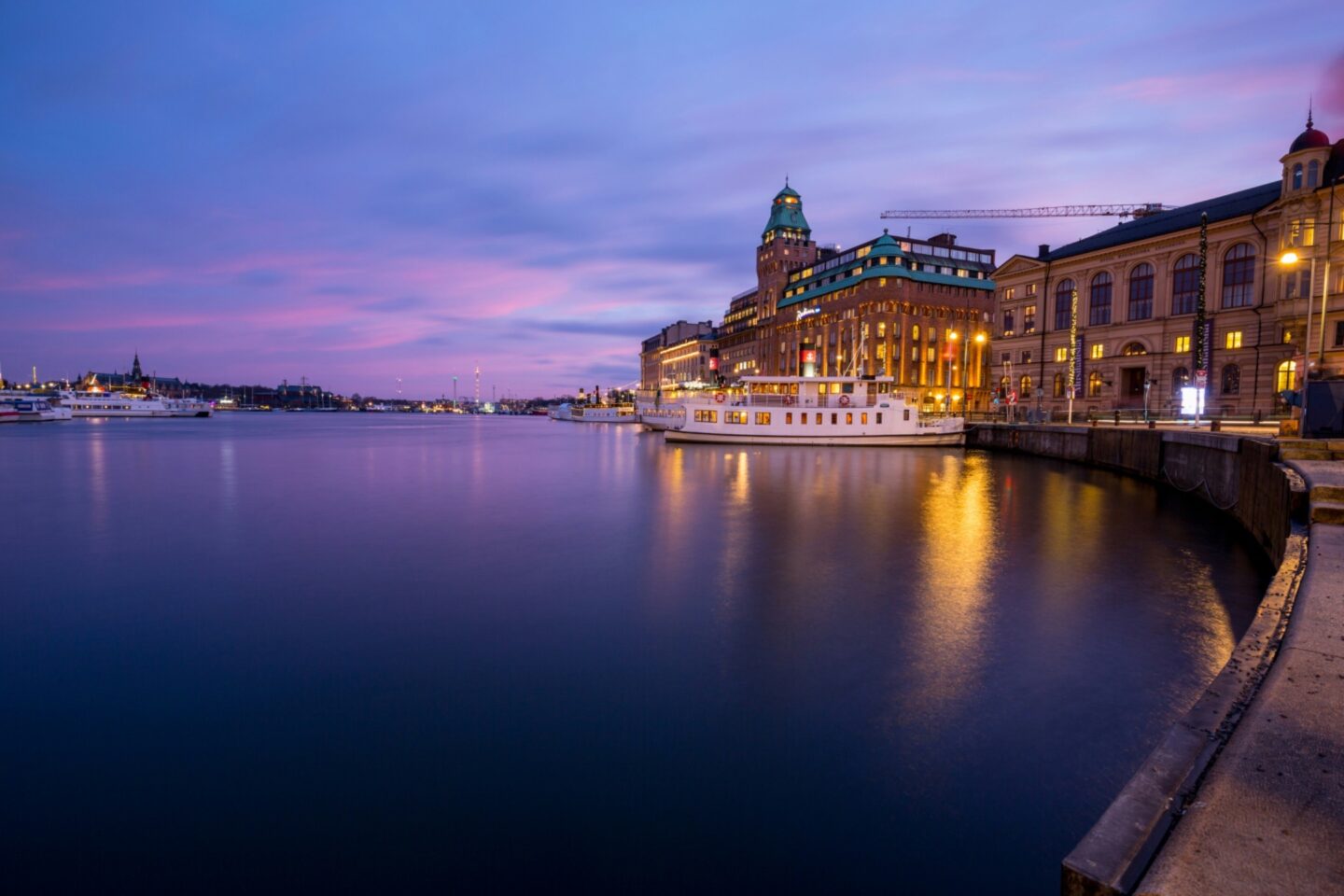
Norway’s capital takes a more contemporary approach to urban beauty. Oslo’s waterfront has undergone substantial redevelopment, creating a broad area of museums, restaurants, public spaces and modern architecture. The Opera House is one of its defining landmarks, with a roof designed as a walkable public surface that slopes towards the harbour. The nearby MUNCH museum adds another major architectural presence, while the older streets around the city centre provide a different perspective. Oslo is also unusually easy to combine with nature. Forested hills rise beyond the urban area, and the city’s public transport network makes it possible to reach outdoor spaces without travelling far from the centre.
Bergen and the Gateway to the Fjords
Bergen delivers perhaps the strongest combination of colourful architecture and dramatic natural scenery. The historic Bryggen district stretches along the harbour with rows of wooden buildings painted in warm reds, ochres and muted browns. Behind them, Mount Fløyen rises above the city, giving visitors an immediate sense of how closely Bergen is tied to the surrounding landscape. A ride on the Fløibanen funicular provides one of the simplest ways to appreciate the setting. From higher ground, the city appears almost surrounded by water and mountains. The harbour remains at the centre of daily life, with boats departing for islands and fjord communities beyond the urban area.
Taking the Scenic Route Through Norway
Bergen is particularly well suited to travellers who want to connect city sightseeing with a broader Norwegian itinerary. The Oslo to Bergen train crosses some of the country’s most striking inland scenery, travelling through mountain landscapes, valleys and high plateaus before reaching the west coast. The journey is long enough to feel like part of the holiday rather than simply a transfer. In good weather, wide windows reveal changing landscapes throughout the route, while winter brings an entirely different atmosphere as snow covers the higher sections. Travellers interested in Scandinavian scenery can therefore make the railway journey an attraction in its own right.
Pastel Details Beyond the Major Capitals
Scandinavia’s colour palette extends well beyond its best-known city centres. Smaller districts and coastal towns often feature wooden homes painted in pale blue, faded pink, cream, yellow and traditional red. These colours are not simply decorative choices. They reflect regional building traditions, available materials and a long history of using paint to protect and distinguish wooden structures. In Denmark and Sweden, low-rise neighbourhoods can feel almost village-like despite being within major urban areas. Norway adds another dimension, with colourful houses often set against mountains, forests or open water. The combination creates scenes that feel naturally picturesque without needing elaborate decoration.
Design, Food and the Beauty of Everyday Life
Scandinavian cities are attractive partly because design extends into ordinary surroundings. Furniture shops, bakeries, libraries, hotels and cafés frequently pay close attention to materials, lighting and proportion. Even a simple coffee break can become an enjoyable part of exploring a neighbourhood. Food adds another layer to the experience. Danish pastries, Swedish cinnamon buns and Norwegian seafood are closely tied to local culture, while modern restaurants have developed sophisticated interpretations of regional ingredients. Markets and bakeries are often particularly useful stops for travellers who want to experience a city without committing to a long meal.
Planning a City-and-Scenery Escape
A Scandinavian itinerary works best when it leaves room for changes of pace. Copenhagen and Stockholm are ideal for several days of urban exploration, while Oslo can act as a bridge between city life and the Norwegian outdoors. Bergen is the natural choice for travellers who want mountains and fjords close at hand. Spring and summer bring long daylight hours and easier access to outdoor spaces, while autumn introduces richer colours and a quieter atmosphere. Winter has its own appeal, particularly for travellers interested in snow-covered landscapes and cosy interiors, although daylight hours are considerably shorter.
A Northern Palette Worth Exploring
The prettiest Scandinavian cities are not beautiful for exactly the same reasons. Copenhagen has colourful canals and elegant streets, Stockholm spreads across islands with a medieval core, Oslo pairs contemporary architecture with nearby forests, and Bergen places brightly painted wooden buildings beneath mountains and beside the fjords. That variety is what makes the region so compelling. A single trip can move from pastel harbour houses to sleek museums, from cobbled historic lanes to open mountain viewpoints. Across Scandinavia, architecture and landscape rarely compete for attention. They tend to frame one another, creating cities where even an ordinary walk can feel remarkably scenic.



Leave a Reply