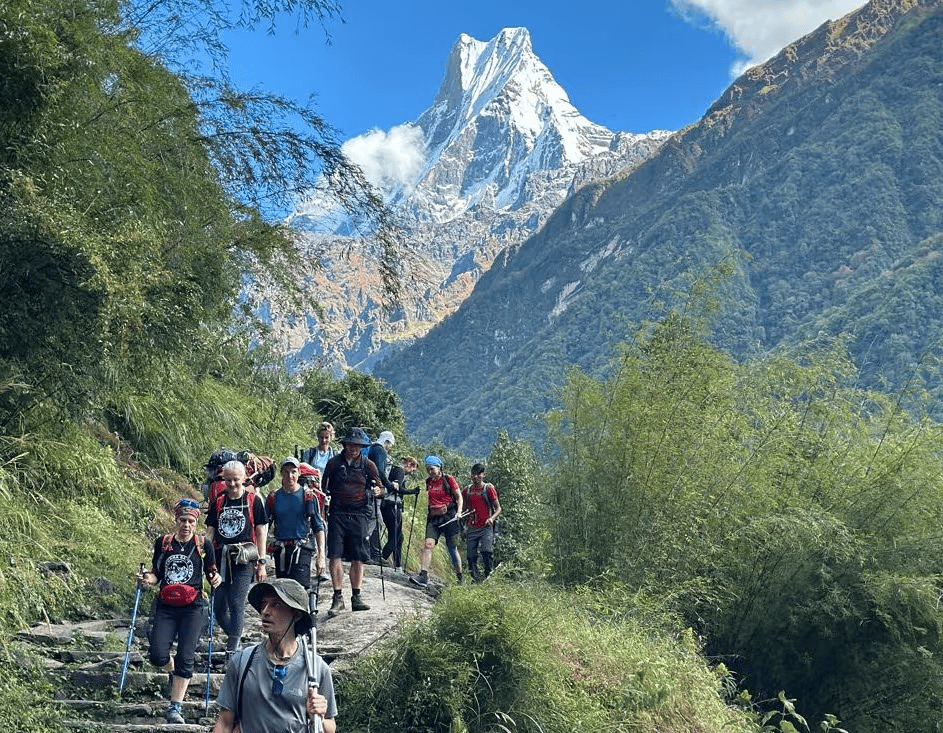
Three Himalayan Adventures, Three Different Experiences
Ask most people what trekking in Nepal looks like and they’ll describe Everest Base Camp: busy lodges, a long line of boots on the trail. That’s only a slice. Out in the quieter valleys, the Manaslu Circuit Trek, the Langtang Valley Trek and the Gokyo Renjo Pass route each offer a very different Himalaya, with their own villages, their own effort and their own feel underfoot.
Manaslu is remote and culturally rich, with a high pass that makes you earn it. Langtang sits close to Kathmandu and is kinder on a tight schedule. Gokyo pairs glowing glacial lakes with one of the Everest region’s toughest crossings. So which one suits you? That depends on how much time you have, how fit you are and what you want from the mountains. This guide covers routes, altitude, permits, seasons and preparation, so you can choose without guessing.
Manaslu Circuit Trek: Remote Villages and Himalayan Mountain Culture
Walking Up the Budhi Gandaki Valley
Most trekkers start at Soti Khola or Machha Khola, and the first few days feel almost tropical. You follow the Budhi Gandaki river through terraced fields, bamboo and steep gorges, crossing suspension bridges again and again. Jagat, Deng and Namrung come next, and with each day the air thins and the forest gives way to pine, rock and open slopes. By Samagaun and Samdo you’re properly in alpine country, with Manaslu, the eighth-highest mountain on earth at 8,163 metres, filling the skyline.
What stays with you is the quiet. The trail sees far fewer people than Everest or Annapurna, so you’ll mostly share it with mule trains, schoolkids and the odd yak.
Tibetan-Influenced Culture and Mountain Life
Higher up, the villages change character. Stone houses huddle together, mani walls line the paths and prayer flags snap in the wind. Monasteries sit above the settlements, and locals walk clockwise around mani walls, so it’s polite to do the same. Samagaun is the cultural heart of the upper valley, a good place to rest and watch daily life carry on around you. Architecture, food and religious customs lean strongly towards Tibet, which makes sense given how close the border is. Prayer wheels turn by the trail, and chanting sometimes drifts out of the monastery.
Crossing Larkya La Pass
Larkya La, at roughly 5,106 metres, is the real test. The pass day is long, often starting well before dawn, and the weather can turn fast. Acclimatisation matters here, so build in spare days instead of squeezing everything into a tight plan. Manaslu is also a restricted area. That means a special permit, a licensed guide and, normally, at least two trekkers travelling together. Check the current rules before you book, because regulations do change.
Langtang Valley Trek: Forests, Glaciers and Tamang Heritage
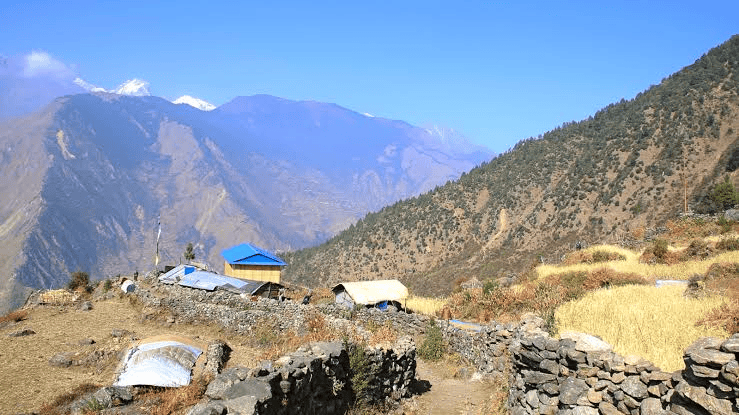
From Syabrubesi to Kyanjin Gompa
Langtang Valley Trek begins in Syabrubesi, which you reach by road from Kathmandu in one long day. From there the trail climbs through Lama Hotel into Langtang Village and on to Kyanjin Gompa. The early miles run through dense forest, with rhododendrons in spring and langur monkeys if you’re lucky. Then the valley opens into wide yak pastures beneath Langtang Lirung.
Because there’s no flight involved, Langtang suits travellers with a week or so to spare. You still get glaciers and big peaks without a huge time commitment.
Tamang Heritage and Life After the Earthquake
The valley is home to Tamang communities, and you notice it in the carved wooden houses, the chortens and the warm, unfussy hospitality in the teahouses. Langtang Village was destroyed in 2015 by the earthquake and the avalanche that followed, and it has since been rebuilt. Today it’s a working village again, and your stay is part of how it keeps going. Sit in the kitchen, sip a hot tea, ask about the yaks. That’s where the valley’s story really comes through.
Kyanjin Gompa and the Side Trips
Kyanjin Gompa makes a natural pause, with a monastery, a small yak cheese factory and views in every direction. Most people spend an extra day climbing Kyanjin Ri for a wide panorama, while stronger trekkers go for Tserko Ri, which is higher and tougher. A spare day also helps your body adjust, so it’s rarely wasted.
Weather there changes quickly, so carry layers on sunny mornings. Evenings get cold, and the wood stove in the dining room becomes the social centre of the lodge. Teahouses here are simple but comfy.
Gokyo Renjo Pass: Turquoise Lakes and High Himalayan Landscapes
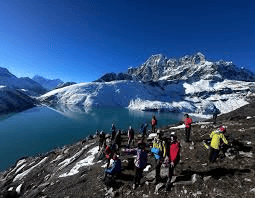
Up the Gokyo Valley
Gokyo sits inside the Everest region but feels like a different world. After the flight to Lukla, the trail passes through Namche Bazaar, then splits towards Dole and Machhermo before climbing to the lakeside village of Gokyo. The Gokyo Lakes are glacial and vividly turquoise on a clear day, with Cho Oyu rising beyond them. Compared with the classic Everest Base Camp route, this valley is higher, wilder and noticeably less crowded. Most itineraries include a night or two around the lakes. Many people hike up Gokyo Ri for the classic sunrise view, and it makes a smart acclimatisation climb before Renjo La.
Renjo La and the Big Views
Renjo La, at about 5,360 metres, is the main challenge. The climb is steep, the air is thin and the descent towards the Thame Valley feels long on tired legs. The payoff comes at the top. On a clear morning, Everest, Lhotse, Makalu and Cho Oyu all line up together. Don’t rush this one. Spend enough time at altitude beforehand, and keep a spare day in case weather shuts the pass. Lodges on the Thame side are basic, so pack snacks and patience. Trekking poles help a lot on the loose, steep descent. Start early, move slowly and drink plenty of water.
Why Gokyo Feels Different
The atmosphere is calmer than the main Everest trail, and the focus is on lakes, ridgelines and Sherpa villages rather than a single destination. Renjo La is also one of the three passes on the Everest Three Passes route, so some trekkers treat Gokyo as a stepping stone to something bigger.
Manaslu, Langtang or Gokyo: Which Himalayan Trek Should You Choose?
Think about what you want to bring home. Manaslu suits people who love remote trails and Tibetan-influenced culture and don’t mind a hard pass. Langtang works for anyone short on time who still wants forests, glaciers and Tamang hospitality. Gokyo is for trekkers chasing altitude and big mountain views who feel comfortable with a demanding crossing.
Route Comparison by Time
These durations are typical ranges, not fixed rules. Your pace, the weather and any extra acclimatisation days can all change them.
| Comparison | Manaslu Circuit | Langtang Valley | Gokyo Renjo Pass |
| Typical trekking time | 14 to 18 days | 7 to 10 days | 12 to 15 days |
| Getting to the trail | Long drive from Kathmandu | Drive to Syabrubesi | Flight to Lukla |
| Main attraction | Remote Himalayan landscapes | Valley scenery and Tamang culture | Gokyo Lakes and high passes |
| Major altitude challenge | Larkya La Pass | Optional high viewpoints | Renjo La Pass |
| Best suited for | Prepared trekkers with three weeks | Travellers with around ten days | High-altitude fans with two to three weeks |
A rough way to decide: under ten days, go Langtang. Around two weeks and happy with a flight, Gokyo fits well. Got three weeks and want solitude? Manaslu. Nobody enjoys a rushed pass. Pick the one you can do comfortably. If you can only choose once, match the trek to your time first and your ambition second.
Best Seasons, Permits and Practical Trekking Preparation
Best Time to Go
Spring (March to May) and autumn (September to November) are the best windows. Autumn usually brings clearer skies and crisp air, while spring gives you warmer days and rhododendrons in bloom at lower elevations. Snow, wind and visibility matter far more above 5,000 metres, so keep your dates flexible if you’re heading over a pass. Winter and monsoon treks are possible in some areas, but passes are riskier then.
Permits and Arrangements
Each trek has its own paperwork. Manaslu needs a restricted-area permit plus the Manaslu Conservation Area permit, and possibly an Annapurna Conservation Area permit if you finish near Dharapani. Langtang requires national park entry. Gokyo requires Sagarmatha National Park entry and a local municipality permit. Fees and rules shift, so confirm everything before you fly. A trekking company such as Escape Himalaya can help with permits, guides, accommodation and route planning.
Packing and Insurance
Layers are everything: a base layer, fleece, down jacket and waterproof shell. Add broken-in boots, a warm sleeping bag, water purification, sun protection and a first-aid kit. Most important, buy insurance that covers high-altitude trekking and helicopter evacuation, and read the small print on altitude limits. Trekking poles, a headlamp and spare batteries are worth the weight. Cash helps, since ATMs vanish on the trail.
Finding the Right Himalayan Adventure
Three treks, three moods. Manaslu rewards patience with remote villages and a culture that feels closer to Tibet. Langtang gives you forests, glaciers and Tamang warmth in a shorter window. Gokyo trades crowds for turquoise lakes and a hard, beautiful crossing at Renjo La.
Be honest about your fitness, your calendar and your comfort at altitude before you choose. Then prepare properly, walk respectfully through the villages you pass, and let the mountains do the rest.
If you’re still undecided, start with Langtang to test your legs, then come back for a bigger route. There’s no rule saying you must do the hardest trek first.



Leave a Reply