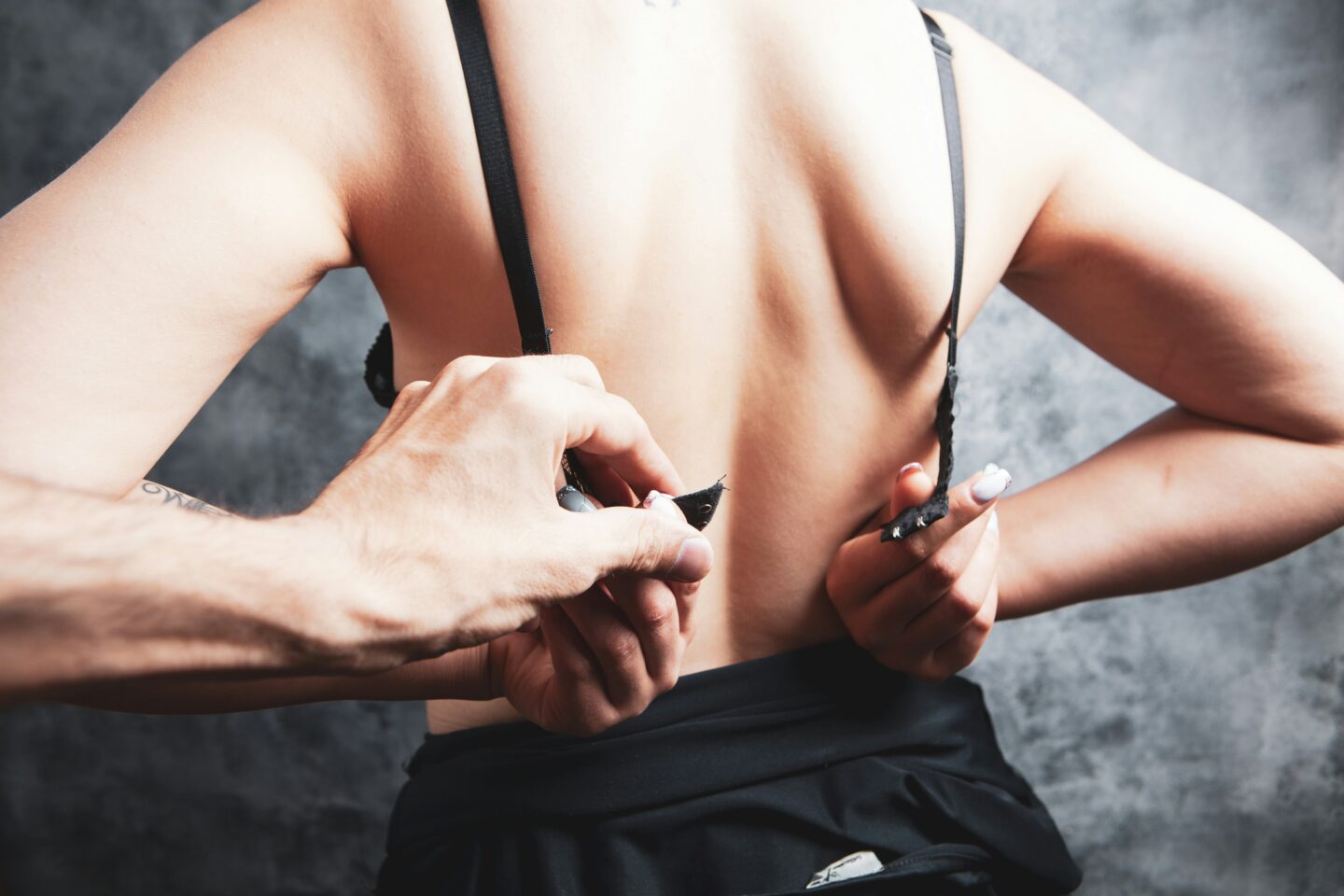
A Jelly Bra can be the right size on a chart and still need a different cut, strap setting, or closure format. That is because fit is a relationship among the wearer, the garment’s proportions, and the way the bra is used. The useful question is not simply whether a bra feels soft or tight. It is which part moves, presses, gaps, or shows—and what that signal suggests changing next.
Soft Intention’s Jelly Bra collection includes pull-on and back-clasp options, full-coverage and lower-neckline shapes, fixed and adjustable straps, and different cup constructions. Those variations make troubleshooting more productive than repeatedly changing size within a single silhouette.
Begin With the Exact Style, Not the Collection Name
Settle the bra into its intended position before judging it. Smooth the band so it runs around the torso without twisting, arrange removable or semi-fixed pads correctly, and adjust any sliders evenly. For a back-clasp style, use a comfortable hook setting. For a pull-on style, confirm that the band has returned to its natural position after dressing.
Measurements provide a starting point rather than a final verdict. Soft Intention’s bra measurement guide explains how to measure the underbust and fullest bust, while also noting that style, fabric, stretch, and construction can affect fit. Compare those measurements with the chart attached to the exact Jelly Bra style under consideration.
Then look for the most specific signal below. Changing one variable at a time makes it easier to tell whether the issue comes from size, shape, adjustment, or outfit compatibility.
Signal 1: The Back Band Climbs Upward
A band that rises toward the shoulder blades is no longer sitting level around the torso. First, loosen overtightened straps; short straps can pull the back upward. If the band still travels after the straps are reset, its tension or construction may not provide the right anchor for that wearer.
With a hook-and-eye style, compare a comfortable hook position without forcing the tightest setting. With a pull-on style, there is no closure adjustment, so the initial band relationship matters more. A related size or a Jelly style with a different closure may be more useful than continuing to shorten the straps.
Signal 2: The Lower Edge Rolls or Slides
Sit in a firm chair, lean forward slightly, stand, and check the lower edge. Rolling can reflect torso length, band depth, fabric tension, or the placement of the bra at the base of the bust. Sliding downward can indicate that the band is not anchored or that the cup and body shapes do not align.
Do not assume that a deeper band always solves rolling. More fabric can feel stable on one torso and crowd the upper abdomen on another. Compare how the edge behaves while seated, because a standing mirror pose may hide the problem.
Signal 3: The Upper Cup Gaps
Persistent space at the top of the cup can come from excess volume, a cup that is too tall, or a shape mismatch. Reposition the bra, settle the breast tissue, and check whether the pads are folded or rotated. If the gap stays in the same place, another size may help, but a lower-coverage or differently shaped Jelly style may be the clearer solution.
Check both sides independently. Bodies are not always symmetrical, and adjustable straps can sometimes accommodate a modest difference. Tightening both straps aggressively to erase a gap can lift the band and create a second problem.
Signal 4: The Cup Edge Cuts In or Tissue Spills
An upper or side edge that divides breast tissue suggests that the cup does not provide enough room or the edge shape is too closed for the wearer. Look at the front and side while standing naturally, then raise the arms once and recheck.
Moving to a larger flexible size may add room, but it can also loosen the band. When that trade-off creates instability, compare a Jelly style with more coverage or a different cup proportion instead. Pressure, numbness, broken skin, or persistent irritation are reasons to remove the garment rather than wait for it to “break in.”
Signal 5: Straps Slip or Carry Too Much Tension
Slipping is not always a strap-length problem. Shoulder slope, strap placement, cup position, and a rising back band can all contribute. On adjustable straps, shorten in small steps only after the band and cups are settled. On fixed-strap styles, confirm that the built-in length and placement suit the wearer’s torso.
Deep shoulder marks can indicate that the straps are being asked to compensate for the rest of the fit. The band and cups should establish the basic position; the straps should help stabilize it. If fixed straps remain incompatible while the cups and band fit, another Jelly style is a more targeted change than altering the overall size.
Signal 6: Pads Look Uneven or Create a False Ridge
Before diagnosing the cup, inspect the pads. A removable insert can turn, fold, or sit higher on one side. A semi-fixed pad can also shift within its available space. Smooth each pad into the intended orientation and compare the cup surfaces again.
Then add a representative top. Foam and pad edges may be subtle under a heavier knit and clearer under a pale stretch jersey. That is an outfit interaction, not necessarily a fit failure. If a smooth line under clothing is a priority, compare the bra beneath the most revealing top it is expected to support.
Signal 7: The Bra Needs Repeated Adjustment
Raise the arms, reach forward, sit, stand, and walk across the room. Recheck the back band, lower edge, cup boundaries, straps, and pads. A small change in flexible fabric can be normal; repeatedly pulling the band down, replacing a strap, or resettling the cups shows that the current combination is not stable for that routine.
Keep this screen limited to ordinary movement. A Jelly Bra intended for everyday wear should not be treated as a sports bra unless the exact product is designed for the planned activity.
Choose the Next Change Deliberately
When one signal appears, change one variable. A climbing band calls for a band-and-strap review. Upper-cup space calls for a cup-shape comparison. Visible edges under a particular top call for an outfit and silhouette check. Difficulty dressing calls for a different closure format.
If the smaller adjacent size compresses while the larger one shifts, neither may be right in that style. The collection’s variation in neckline, coverage, straps, and closures provides other routes to a better match. A successful Jelly Bra fit is not the size label that wins a comparison; it is the style and size that remain appropriately positioned without unacceptable pressure during the wearer’s ordinary routine.



Leave a Reply