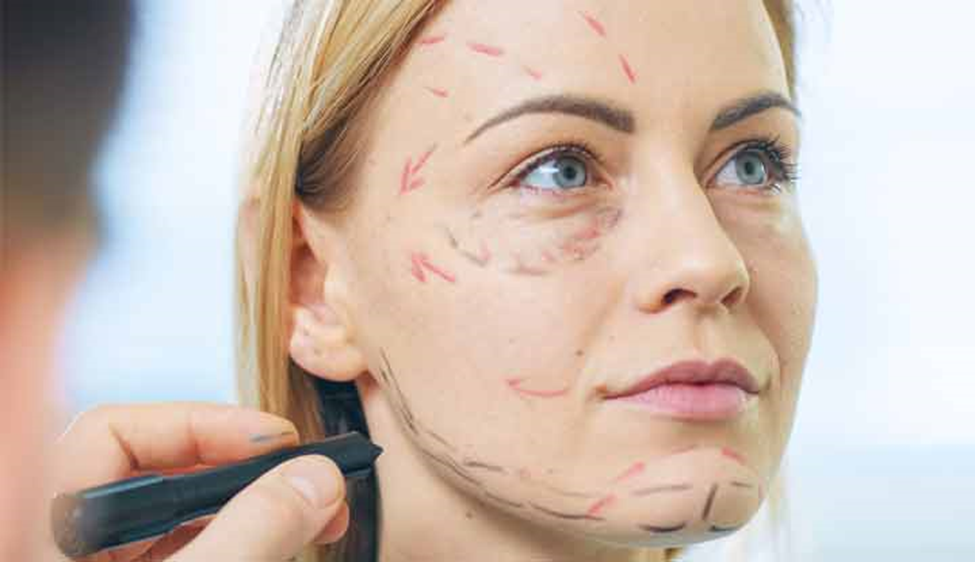
Most of what determines how a facelift heals is decided before anyone picks up a scalpel. Surgical technique matters enormously, but so does whether you stopped smoking in time, whether you were honest about the supplements in your bathroom cabinet, and whether you arranged your life so that the two weeks afterwards are boring rather than stressful.
This is the preparation that actually changes outcomes, roughly in the order you need to think about it.
Before you consent
There is a requirement in the General Medical Council’s guidance for doctors offering cosmetic interventions that almost no patient knows about, and it is worth knowing.
The doctor who will perform your operation must be the one who discusses it with you and seeks your consent. The guidance states plainly that this responsibility cannot be delegated. If you are being consented by a patient coordinator, a nurse or anyone who will not be in theatre, that is not how it is supposed to work, and it is a reasonable thing to question.
The same guidance says you must be given the time and information you need to reach a voluntary and informed decision, and that you must be told you can change your mind at any point. There is no fixed cooling off period written into it, so the judgement falls to the surgeon. A practice that is comfortable with you taking a few weeks is behaving the way the guidance intends. One that offers a discount if you book today is not.
This is also the stage to be clear with yourself about which operation you are actually having, since facelift surgery in London covers a wide range of procedures that get marketed under similar names. Knowing whether you are having a limited lift or a full one changes everything that follows, including how much time off you need.
Eight to four weeks before: stop smoking
If you take one thing from this list, take this one, because it has the best evidence behind it of anything a patient can control.
A Cochrane review of preoperative smoking cessation found that intensive programmes beginning at least four weeks before surgery reduced the risk of any postoperative complication by more than half, with a risk ratio of 0.42. For wound complications specifically it was 0.31, meaning roughly a third of the risk. The same review found that brief interventions, the sort of thing where someone mentions it once at a consultation, produced no clear benefit at all.
The mechanism matters for a facelift more than for most operations. Nicotine constricts the small blood vessels that supply the skin flaps, and those flaps are entirely dependent on that blood supply while they heal. Poor perfusion is how you get delayed healing, widened scars and, in the worst cases, skin loss in front of the ear.
Four weeks before is the floor rather than the target, and the review suggests four to eight weeks with real support rather than willpower alone. This includes vapes and nicotine replacement, since nicotine is the problem rather than the smoke. Most surgeons ask for the same four weeks afterwards.
Four weeks before: medications, supplements and weight
Write down everything you take, including the things you do not think of as medication, and go through the list with your surgeon rather than deciding yourself.
Several common supplements thin the blood and increase bruising. Fish oil, vitamin E, ginkgo, high dose garlic and turmeric are the usual ones. Aspirin and anti inflammatories like ibuprofen do the same. Most surgeons ask for these to stop around two weeks beforehand.
The exception matters. If you are on a prescribed blood thinner, never stop it on your own initiative. That decision belongs to the doctor who prescribed it, working with your surgeon, and the consequences of stopping it unsupervised are considerably worse than bruising.
If your weight has been changing, this is the moment to say so. A face that is still losing volume will not hold a result planned around its current shape, and most surgeons prefer to operate once weight has been stable for a period of months.
Two weeks before: arrange the boring things
Recovery goes badly when people have not planned for it, and the planning is unglamorous.
You will need someone to collect you and stay with you for the first night. You cannot drive yourself and a taxi alone is not sufficient. Arrange time off that assumes the slower end of the recovery estimate rather than the faster one, because planning to be back at your desk on the earliest possible day guarantees you will be back under pressure.
Sort out the sleeping setup now. You will be sleeping on your back with your head elevated for a week or more, and discovering on night one that you cannot do it is a miserable way to find out. Extra pillows or a wedge, bought and tried in advance.
Stock the kitchen with soft food, since chewing is uncomfortable early on. Get button front shirts, because nothing should be pulled over your head. Fill prescriptions before the operation rather than on the way home from it.
If you have small children or care for someone, arrange genuine cover rather than optimistic cover.
The week before
No new skincare, no facials, no waxing or laser anywhere near the operative area, and no new hair colour unless your surgeon says otherwise. Colour your hair beforehand if you want to, since you will not be doing it for a while afterwards, and clear it with the clinic first.
Alcohol goes in this week. It affects bruising and it interacts with the anaesthetic.
On the subject of arnica and bromelain, which many surgeons recommend for bruising and swelling, the evidence is thinner than the enthusiasm. Some find them helpful, the trials are small and inconsistent, and they do no harm. Follow your surgeon’s protocol rather than a supplement aisle.
Take your before photographs, or make sure the clinic has. People consistently forget what they looked like, and six months later the comparison is the only honest record you have.
The night before and the morning of
Follow the fasting instructions you are given precisely, which typically means no food for several hours beforehand and clear fluids stopped closer to the time. Getting this wrong usually means the operation is cancelled on the day.
Wash your hair and your face. Remove all makeup, nail varnish, jewellery and contact lenses. Wear something comfortable that fastens at the front. Leave valuables at home.
Expect to feel nervous. Everyone does, and it is not a sign you are making the wrong decision.
The thing most people underestimate
The physical recovery from a facelift is usually easier than people expect. The psychological part is harder.
There is a stretch, somewhere between the first week and the third, where the swelling has not settled, the bruising is at its ugliest, the face looks tight and strange, and a perfectly normal person becomes convinced something has gone wrong. Almost nothing has. Knowing that period is coming is most of what gets people through it calmly.
Judge nothing at two weeks. The face at two weeks is not the result, and anyone who tells you otherwise has not seen enough of them. How long the settling takes also depends on what was done, since a limited lift and a deep plane facelift have quite different recovery curves, so ask your surgeon for a timeline specific to your operation rather than working from a general one.



Leave a Reply