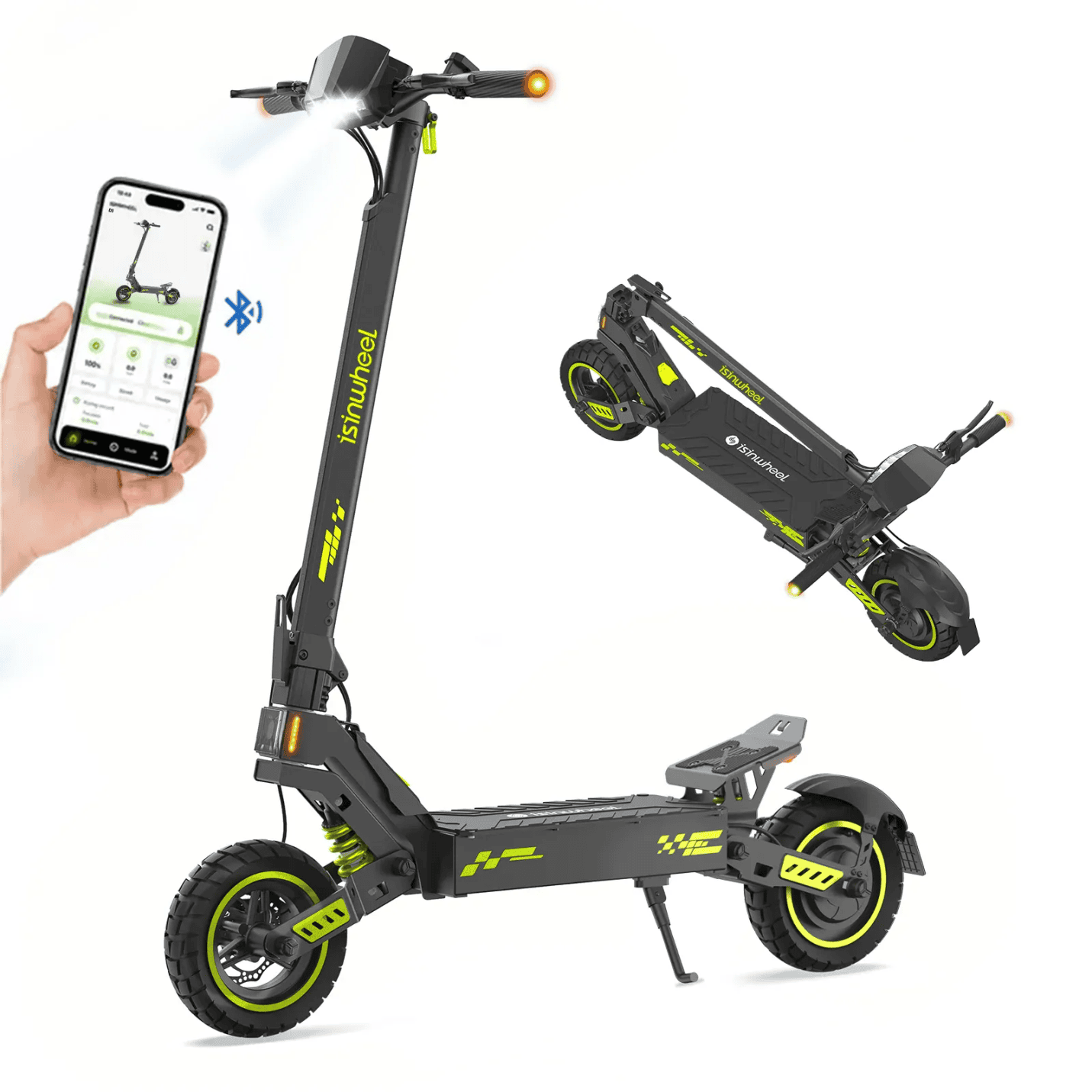
A friend of mine bought his first escooter purely on the strength of a spec sheet. Biggest battery in his price bracket, punchiest motor, glowing five-star reviews. Three weeks later he messaged me to say his back ached after every ride and he was still charging it every other day despite a “40km range” badge on the box. Nothing on that spec sheet had asked him a single question about his actual commute.
That’s the trap almost everyone falls into. Range, motor power, and comfort get treated as three separate scores to maximise, when really they only mean anything in relation to each other — and to how you actually ride.
Start With Your Real Riding Needs, Not an Ideal One
Before comparing a single model, get honest about a normal week rather than a best-case one.
How many kilometres do you actually cover each day? Flat streets or hills and flyovers? Riding solo, or occasionally with a passenger on the back? Smooth tarmac, or the kind of pavement that’s more pothole than path?
These answers set your floor, not your ceiling. Someone doing a couple of kilometres round a flat neighbourhood genuinely doesn’t need the biggest battery on the market — that capacity just becomes dead weight they’re hauling up the stairs every night. A daily commuter covering a longer, hillier route benefits far more from extra range and a stronger motor, particularly where an incline features twice a day, every day.
One thing I’ve noticed testing scooters over the past couple of years: riders almost always overestimate their daily distance and underestimate how much hills eat into range. Worth checking your actual route on a map before you shop, not after.
1. Understand What “Range” Actually Means
Range is the first number everyone notices — and the one most likely to mislead.
Manufacturers test under controlled lab conditions: flat ground, ideal temperature, a rider close to a specific reference weight, moderate constant speed. Real-world riding rarely matches any of that. Rider weight, wind, tyre pressure, temperature, terrain, and how often you’re accelerating and braking all chip away at the claimed figure — sometimes by 20–30%.
If your round trip is 30km, buying a scooter advertised at exactly 30km leaves you almost no margin. One cold morning or one detour around roadworks and you’re pushing it home.
A practical target: daily distance × 1.3 to 1.5 = a sensible claimed-range figure to shop for.
It’s not a universal formula — performance varies scooter to scooter — but it’s a far better starting point than taking the box number at face value.
Charging habits matter here too. If you can reliably plug in every night, you don’t need an oversized battery just for peace of mind. If your charging access is patchy — a shared building, no plug at work — extra range earns its keep.
Battery chemistry is worth a glance as well. Lithium-based packs remain the sensible default for everyday commuting: a reasonable balance of weight, efficiency, and longevity compared with older chemistries.
2. Look Past the Motor’s Wattage Number
Motor wattage gets treated like a leaderboard stat, and it’s genuinely one of the more misleading specs on the sheet.
Higher wattage generally improves acceleration, hill performance, and how well the scooter copes with extra weight. But wattage alone doesn’t tell you much — controller tuning, battery voltage, overall scooter weight, and gearing all shape how that power actually reaches the road.
On mostly flat routes, an entry-level motor is often genuinely adequate — there’s no prize for buying more than the terrain will ever ask for.
On steep streets, regular flyovers, or routes needing repeated hard acceleration (pulling away at junctions, merging with traffic), a stronger motor stops being a luxury and starts being the difference between a scooter that keeps up and one that labours.
Rider weight compounds this. A heavier rider — or a scooter regularly carrying a passenger — asks noticeably more of the motor, especially from a standing start or on an incline. If that’s your situation, don’t buy to the average rider’s spec sheet; buy to yours.
The better question isn’t “which has the biggest motor?” It’s: does this scooter have enough power for my weight, my roads, and my normal riding conditions?
3. Don’t Trade Comfort for Numbers on a Sheet
A scooter can post excellent range and power figures and still be genuinely unpleasant to ride twenty minutes into a commute.
Comfort matters most on longer or more frequent journeys, where a slightly awkward riding position or poor suspension compounds ride after ride rather than being a one-off annoyance.
Check the riding position first. You want enough room to stand naturally, a comfortable grip height, and no strain building in your back or shoulders. If there’s a seat, its width, cushioning, and height all matter more than they look like they would in a product photo.
Then suspension. Good suspension absorbs potholes, cracked pavement, and speed bumps, and it does double duty by improving stability at speed. If your usual route is rough rather than smooth tarmac, suspension quality deserves more attention than most buyers give it — it’s easy to skip past on a spec sheet and painful to discover you skipped past it after the first wet, rutted commute.
4. Tyres and Wheels Are Part of the Comfort Equation
Tyres don’t get the attention they deserve, and they arguably affect day-to-day comfort more than the headline suspension spec.
Larger wheels generally roll over small surface imperfections more easily. Tyre width and construction affect grip and stability. Tubeless tyres are worth considering for everyday commuting, since they reduce the hassle of certain types of puncture.
But don’t pick tyres on size alone. Match them to your actual roads — the tread pattern, compound, and inflation requirements that suit smooth city streets are different from what you’d want on cracked or gravelly pavement. And check that replacements are actually available before you commit; an unusual tyre size can turn a five-minute swap into a multi-week wait.
Tyre pressure is a small thing that has an outsized effect on comfort, efficiency, and handling — worth checking monthly, not just at purchase.
5. Balance Range, Power and Weight — Don’t Maximise All Three
The easiest mistake in this whole process is assuming more of everything is automatically better.
A bigger battery extends range but adds weight you’ll feel every time you carry the scooter upstairs or lift it into a car boot. A more powerful motor improves acceleration and hill-climbing, but if your commute is short and flat, you’re paying — in weight and often in price — for capability you’ll rarely use.
| Riding profile | Priority | Trade-off worth accepting |
|---|---|---|
| Short flat urban commute | Low weight, easy carrying | Modest range and power |
| Longer flat/rolling commute | Extra battery capacity | A few extra kg to carry |
| Hilly or flyover-heavy route | Motor power and torque | Slightly shorter range per charge |
| Frequent passenger or heavy rider | Motor power and stronger brakes | Reduced top-end range |
| Mixed rough terrain | Suspension and tyre quality | Possibly less raw range |
None of these profiles is “better” than another — they’re just different starting points, and most riders are somewhere between two of them.
6. Think About Charging Before You Buy, Not After
Range only matters if recharging fits your actual life.
Check charge time, where realistically you’ll be charging (garage, hallway, office if permitted), and whether that location supports the charger safely. For a daily commuter, reliable overnight charging can make a moderate-range scooter genuinely more practical than a longer-range one you’re constantly topping up mid-week out of anxiety.
Battery warranty and realistic replacement costs deserve real attention here too — the battery is the single most expensive component on the scooter, and after-sales support around it should weigh into the decision as heavily as the headline range figure.
7. Test Ride Before You Commit
Wherever it’s possible, sit on the actual scooter and ride it — ideally over a surface similar to your real commute, not just a smooth showroom floor.
Pay attention to:
- Can you comfortably reach the controls without hunching?
- Is there enough foot and leg room for your height?
- Does the suspension actually absorb bumps, or just transmit them more slowly?
- Does the motor feel strong enough on even a gentle incline?
- Is the braking response predictable and confidence-inspiring?
- Can you balance and manoeuvre it comfortably at walking pace?
A five-minute test ride reveals things no spec sheet will admit to. My friend from the opening story — the one with the aching back — never test rode his. He’s on his second scooter now, and this time he did.
Frequently Asked Questions
What’s a realistic range to look for if I commute 10km round trip?
Using the 1.3–1.5x guideline, aim for a scooter advertised around 13–15km minimum, though a larger margin is safer if your route includes hills, cold weather, or variable wind. Real-world range typically runs lower than the box figure, so treat the advertised number as a ceiling, not a promise.
Does a bigger motor always mean a better scooter?
No. A bigger motor helps with hills, acceleration, and carrying extra weight, but on flat, short commutes it mostly adds cost and weight without a meaningful benefit. Match motor power to your terrain and body weight rather than chasing the largest number available.
How much does rider weight actually affect performance?
Considerably. Heavier riders draw more from the battery, particularly when accelerating or climbing, which can noticeably shorten real-world range compared with the tested figure. If you’re above the manufacturer’s reference weight, budget for a bigger margin on both range and motor power than the spec sheet suggests.
Is suspension really necessary for city riding?
It depends on your roads. Genuinely smooth, well-maintained tarmac makes suspension a nice-to-have rather than essential. Cracked pavement, potholes, or frequent kerbs make it far more important, both for comfort and for protecting the scooter’s components over time.
Are tubeless tyres worth paying extra for?
For most everyday commuters, yes. They reduce the inconvenience of certain punctures and generally need less maintenance than tubed alternatives, though they can be costlier to replace and less universally available depending on the tyre size.
How do I know if a scooter is too heavy for me?
If you’ll be carrying it upstairs, lifting it into a car, or navigating stairs at a train station regularly, try lifting a similar-weight model in person before buying. A scooter that performs brilliantly on the road but is genuinely difficult to lift daily often ends up used far less than intended.
Should I prioritise range or power if I can’t have both?
It depends entirely on your route. Flat, longer commutes generally benefit more from range. Hilly or stop-start routes benefit more from power, since a weak motor on an incline burns through battery faster than a strong one does, partly offsetting the range advantage anyway.
What’s the single most overlooked spec when people shop for an escooter?
Suspension and tyre quality, consistently. Buyers fixate on range and top speed, then discover the ride itself is uncomfortable on their actual streets — a problem no amount of battery capacity fixes.
How often should I check tyre pressure?
Roughly monthly for regular commuters, and always before a longer ride. Under- or over-inflated tyres affect handling, comfort, and how efficiently the motor uses the battery, so it’s a small habit with an outsized payoff.
Is it worth test riding more than one model?
Yes, if you can manage it. Spec sheets make scooters look far more similar than they feel in practice — riding position, brake feel, and how power delivery is tuned vary more between models than most buyers expect going in.
The Right Escooter Is the One That Fits Your Routine
There’s no single best scooter for every rider — only the one that matches your distance, your terrain, your weight, and how often you’re actually willing to ride it.
Start with your real daily distance and use it to set a sensible range target. Choose motor power based on your weight and your hills, not the biggest number on the shelf. Then give comfort — riding position, suspension, tyres — the attention it deserves, especially if you’re riding most days rather than occasionally.
Check charging time, battery warranty, and replacement costs before you buy, not after. None of that is as exciting as a top-speed figure, but it’s what actually determines whether you’re still enjoying the ride in six months.
My friend’s second scooter, chosen after an actual test ride on his actual commute, has covered more miles in three months than his first one did in a year. That’s really the whole test: not the fastest escooter, or the one with the longest claimed range, but the one you’ll actually want to ride tomorrow. If you’re weighing up your first or next one, browsing an escooter with your own route in mind — rather than the spec sheet alone — is the better place to start.



Leave a Reply