
Most people begin their engagement ring search with the gemstone.
They compare color. They compare size. They compare price. Some focus on rarity, while others focus on sparkle.
These factors certainly matter. However, many buyers overlook an important reality:
A gemstone is only one part of the finished ring.
The design and craftsmanship behind a ring can dramatically influence its appearance, durability, and overall character. A high-quality gemstone placed in a poorly designed setting may never reach its full potential. On the other hand, a thoughtfully designed ring can elevate even a modest gemstone into something truly memorable.
This raises an important question:
What actually makes a gemstone engagement ring stand out?
The answer usually comes down to two factors: design and craftsmanship.
Why Does Ring Design Matter More Than Most Buyers Realize?
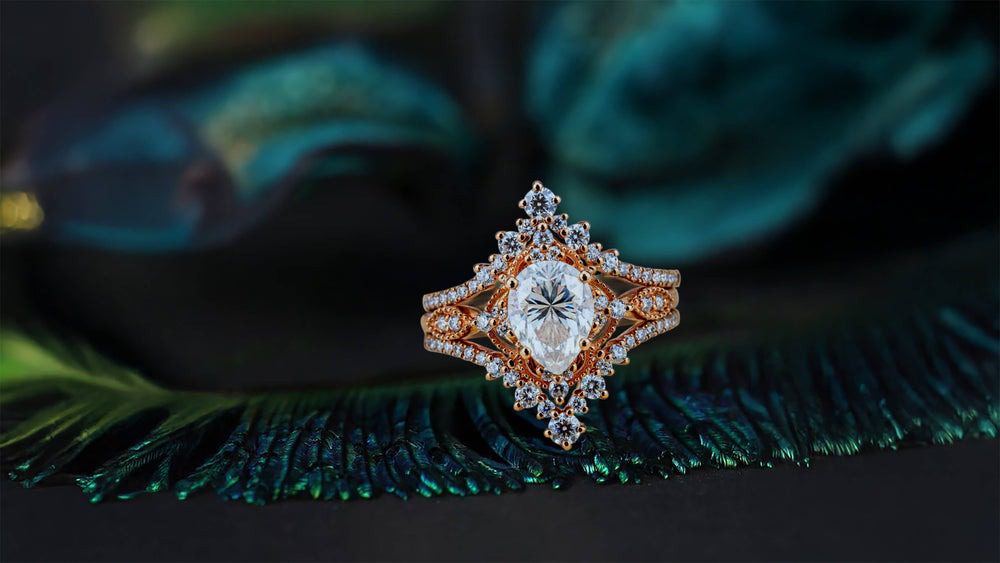
Many buyers assume the center stone determines everything.
In reality, the setting influences how people experience the gemstone.
A well-designed setting controls how light enters the stone, how secure it remains, and how balanced the entire ring feels on the hand. Even small design decisions can make a noticeable difference.
For example, a carefully crafted moissanite engagement ring often appears more refined when paired with the right setting style. Designers frequently use halo settings, hidden details, or vintage-inspired elements to enhance the stone’s natural brilliance. The gemstone attracts attention, but the design shapes how that brilliance is perceived.
This relationship between stone and setting explains why experienced jewelers rarely evaluate gemstones in isolation.
They evaluate the ring as a complete composition.
The Problem With Choosing a Gemstone First
Many engagement ring buyers follow a simple process.
They choose a gemstone first and think about design later.
This approach can create unexpected challenges.
Not every gemstone works equally well in every setting.
Some stones perform best in minimalist designs. Others benefit from more intricate craftsmanship. Certain gemstones appear larger in halo settings, while others look stronger in solitaire designs.
The better question is not:
“Which gemstone should I choose?”
The better question is:
“What combination of gemstone and design will achieve the look I want?”
When buyers approach the process this way, they often achieve more balanced and satisfying results.
How Designers Build Around the Unique Qualities of a Gemstone
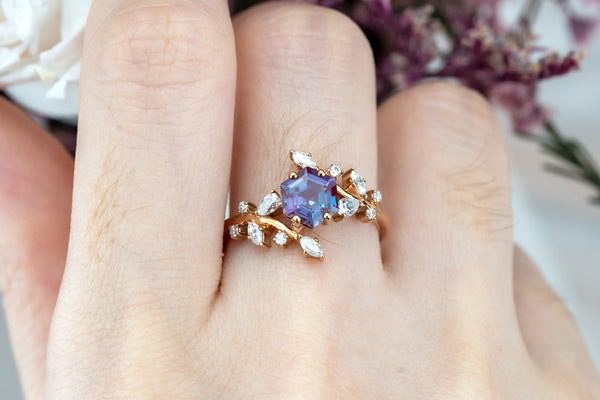
Professional jewelry designers rarely use a one-size-fits-all approach.
Each gemstone possesses different visual characteristics.
Some display exceptional brilliance. Some display rich color. Others create visual interest through unusual optical effects.
An Alexandrite Ring For Women provides a useful example. Alexandrite is known for its ability to display different colors under different lighting conditions. Designers often select settings that allow light to enter from multiple directions. This approach helps showcase one of the gemstone’s most distinctive features.
The same principle applies to other gemstones.
Good design responds to the stone itself rather than forcing every gemstone into the same template.
This level of customization often separates fine jewelry from mass-produced jewelry.
Why Craftsmanship Matters Just as Much as Design
A beautiful design remains only an idea until someone brings it to life.
That is where craftsmanship becomes essential.
Modern technology allows jewelers to create highly accurate digital models. Computer-aided design software has improved precision throughout the jewelry industry.
However, technology cannot replace skilled finishing work.
Craftsmanship influences:
- Stone security
- Surface quality
- Symmetry
- Comfort
- Durability
- Fine details
A skilled jeweler spends considerable time refining these elements.
Many details remain invisible in product photographs. Yet people often notice them immediately when wearing the ring.
The difference between average craftsmanship and exceptional craftsmanship is usually found in these small details.
Why Vintage and Nature-Inspired Designs Continue to Attract Buyers
Some engagement ring styles remain popular because they offer more visual depth.
Vintage-inspired and nature-inspired rings are good examples.
These designs often incorporate:
- Milgrain detailing
- Floral patterns
- Leaf motifs
- Decorative galleries
- Engraved surfaces
- Halo settings
These elements create texture and character.
Many buyers appreciate rings that reveal new details over time. A ring with thoughtful craftsmanship often rewards closer inspection.
This preference reflects a broader trend in luxury goods.
Consumers increasingly value individuality and artistic expression over uniformity.
How Design Affects Long-Term Wearability
A ring should not only look beautiful on the day of the proposal.
It should perform well for years.
This requirement creates another challenge for designers.
Every engagement ring must balance aesthetics and function.
A ring that looks impressive but feels uncomfortable may become frustrating to wear.
For this reason, professional jewelers consider several practical factors:
Stone Protection
The setting should protect the gemstone from everyday impact.
Comfort
The ring should fit naturally on the finger.
Structural Integrity
The band should remain strong enough for long-term wear.
Maintenance
The design should allow reasonable cleaning and inspection over time.
The most successful rings achieve all of these goals simultaneously.
Why More Buyers Are Choosing Custom Gemstone Rings
Consumers today have access to more jewelry options than ever before.
Ironically, this abundance of choice often increases demand for customization.
Many buyers want a ring that feels personal.
They want control over:
- Gemstone selection
- Metal type
- Design details
- Ring proportions
- Overall aesthetic
Custom design allows buyers to participate in the creative process rather than simply selecting from existing inventory.
This collaborative approach often produces jewelry that carries stronger emotional significance.
The finished ring reflects personal preferences rather than market trends.
The Future of Gemstone Engagement Ring Design
The engagement ring market continues to evolve.
Buyers still appreciate high-quality gemstones. That will likely remain true.
At the same time, design and craftsmanship are becoming increasingly important factors in purchasing decisions.
People want more than visual beauty.
They want originality.
They want thoughtful details.
They want jewelry that reflects their story.
As a result, the future of gemstone engagement rings will likely focus less on standardization and more on personalization.
The gemstone may capture attention first.
But design and craftsmanship are what transform a ring from beautiful to unforgettable.
Conclusion
Many people begin their search by focusing on the gemstone alone.
That approach is understandable, but it tells only part of the story.
The most successful gemstone engagement rings combine three essential elements:
- A carefully selected gemstone
- Thoughtful design
- Skilled craftsmanship
When these elements work together, the result becomes more than jewelry.
It becomes a piece that people enjoy wearing, remembering, and eventually passing down.
That is what truly gives an engagement ring lasting value.
Works Cited (MLA)
Gemological Institute of America. Gem Encyclopedia. GIA,
Gemological Institute of America. Jewelry Design and Manufacturing Resources. GIA,
Shor, Russell. “Understanding Gemstone Durability and Jewelry Design.” Gemological Institute of America
Content Verification Notes
Verifiable Information
- Jewelry settings influence gemstone appearance and light performance.
- Craftsmanship affects durability, symmetry, comfort, and finishing quality.
- Alexandrite displays color-change properties under different lighting conditions.
- Moissanite is known for high brilliance and durability.
- CAD technology is commonly used in jewelry design.
- Vintage-inspired rings often feature milgrain, engraving, halo settings, and decorative details.
Analysis and Interpretation
- The argument that design is as important as the gemstone.
- The view that custom jewelry provides stronger emotional value.
- The observation that consumers increasingly seek individuality in engagement ring design.
These are interpretations based on industry trends and design principles rather than universally measurable facts.
Removed Due to Lack of Verification
- Specific market growth percentages.
- Claims about consumer behavior without published supporting data.
- Statements about future market outcomes presented as certainty.
- Any performance claims regarding specific jewelry brands.



Leave a Reply