
The demand for cosmetic procedures that sit between traditional non-invasive treatments and surgery continues to grow. Patients increasingly want options that can address skin laxity, facial definition and small areas of localised fat without committing immediately to more invasive surgical procedures.
One treatment receiving increasing attention is Endolaser Treatment, a minimally invasive procedure in which laser energy is delivered beneath the skin through a fine optical fibre.
Deep Aesthetics offers Endolaser from its London and Birmingham clinics, with treatment plans based on individual anatomy, skin quality and cosmetic goals rather than a standard approach for every patient. Its current Endolaser platform uses 980nm and 1470nm wavelengths and can incorporate laser-assisted lipolysis and suction where appropriate.
But what exactly is Endolaser, and what should patients understand before considering it?
What Is Endolaser?
Endolaser is different from many conventional laser treatments because the laser energy is delivered beneath the skin rather than solely from a device placed on its surface.
A very fine optical fibre is introduced into the selected treatment area. Controlled laser energy is then delivered within the tissue.
Depending on the individual’s concern and treatment plan, Endolaser may be considered where mild-to-moderate skin laxity, localised fat or a combination of the two contributes to the appearance a patient wants to improve.
The available evidence around aesthetic Endolaser procedures is developing rather than definitive. Current research supports discussing potential improvement rather than promising a predictable amount of tightening or contour change for every patient.
Why Has Endolaser Become So Popular?

Many people seeking aesthetic treatment fall into an interesting middle ground.
They may feel that skincare and surface treatments alone are unlikely to address their concern, but they may not want—or require—a surgical facelift, neck lift or liposuction procedure.
This has created greater interest in minimally invasive treatments capable of working beneath the skin.
Areas commonly discussed during Endolaser consultations include the lower face, jawline, jowls, under-chin region, neck and selected body areas. Whether any of these areas are suitable for treatment depends on what is actually causing the concern.
For example, poor jawline definition might be influenced by loose skin, submental fat, facial structure, soft-tissue distribution or several of these factors occurring together.
That is why assessment should come before choosing the technology.
Skin Tightening Is Only Part of the Conversation
Endolaser is frequently associated with skin tightening, but it is useful to understand what that phrase really means.
Controlled thermal energy delivered within tissue may contribute to a remodelling response. Research into laser-assisted procedures has investigated collagen-related changes following this type of controlled heating.
However, individual response varies.
Factors such as age, skin condition, degree of laxity, anatomy, treatment technique and healing response can all influence the eventual cosmetic change.
This means responsible practitioners should discuss possible improvement rather than guarantee an exact degree of tightening.
Endolaser for Facial Contouring
The lower face is one of the areas where minimally invasive contouring has attracted considerable interest.
Changes around the jawline and jowls can develop because of both skin laxity and changes in facial fat.
For selected patients, Endolaser Face and Neck treatment may be considered where relatively mild or moderate concerns affect the lower face, jawline, submental region or neck.
Deep Aesthetics’ dedicated face-and-neck service includes individual assessment before treatment, with treatment areas confirmed according to anatomy and suitability. The clinic also states that risks, recovery and realistic limitations are discussed beforehand.
This distinction is important because facial ageing is complex.
Treating a small fat deposit cannot alter underlying bone structure, and improving skin laxity cannot correct every cause of jowling.
What About Localised Fat?
Endolaser may also be considered in selected cases where small areas of localised fat contribute to poor definition.
Laser-assisted lipolysis involves directing thermal energy toward selected fatty tissue.
This does not make Endolaser the same as traditional surgical liposuction.
Liposuction is designed to physically remove larger quantities of fat through a surgical procedure, while Endolaser may be considered for more targeted concerns depending on the treatment area and patient anatomy.
Patients seeking significant fat removal or major body reshaping may therefore require a different procedure.
A responsible consultation should identify whether the main problem is fat, skin laxity or another anatomical factor before treatment is recommended.
More Technology Does Not Mean Every Patient Needs More Treatment
One of the recurring themes in aesthetic medicine is the temptation to assume that a more powerful or sophisticated technology must automatically produce a better result.
That is not how individual treatment planning works.
The most suitable procedure depends on the problem being treated.
Someone with mild lower-face laxity and a small amount of submental fat may have very different treatment needs from someone with significant excess skin.
Similarly, increasing laser intensity cannot compensate for an anatomical issue that would be better addressed surgically.
Good aesthetic treatment is therefore based on matching the procedure to the patient rather than matching every patient to the same procedure.
What Happens During Endolaser Treatment?
The precise process varies according to the treatment area and clinic protocol.
At Deep Aesthetics, local anaesthetic is used and the Endolaser system delivers energy beneath the skin using fine optical fibres. The clinic’s system uses 980nm and 1470nm wavelengths and includes lipolysis and integrated suction capabilities that may be incorporated when appropriate.
Patients can usually return home after treatment.
However, minimally invasive does not mean completely free of recovery.
Swelling, tenderness, bruising and temporary changes in sensation can occur, and patients should receive individual aftercare instructions.
Is Endolaser Painful?
Patients frequently ask whether Endolaser is painless.
That description would be misleading.
Local anaesthetic can be used to improve comfort, but the experience varies between individuals and treatment areas. Deep Aesthetics describes sensations such as warmth or pressure as possible during treatment, while its patient guidance acknowledges that discomfort can vary.
A consultation should therefore include a realistic conversation about both the procedure itself and recovery.
When Will Patients See a Result?
Patients should not assume that the final appearance can always be judged immediately after treatment.
Early swelling can temporarily affect contour, while tissue remodelling takes place over time.
The eventual result can depend on:
- The area being treated
- Degree of existing skin laxity
- Distribution of localised fat
- Skin and tissue quality
- Treatment technique
- Individual healing response
This is another reason dramatic promises should be treated cautiously.
The most useful expectation is generally improvement rather than an identical result for every patient.
Endolaser Is Not the Same as Endolift
The names can create confusion, but Endolaser and Endolift® should not automatically be treated as interchangeable.
Endolift® is a registered trademark associated with a specific laser platform.
Deep Aesthetics states explicitly that it is not affiliated with, authorised by or a registered provider of Endolift®. Its Endolaser service uses a separate dual-wavelength 980nm and 1470nm system with additional lipolysis and suction functionality.
Patients comparing clinics should therefore ask exactly which technology is being offered rather than assuming similarly named treatments use identical equipment.
Questions Worth Asking Before Treatment
Before choosing Endolaser—or any advanced aesthetic procedure—patients should understand exactly what they are agreeing to.
Useful questions include:
- What is actually causing my cosmetic concern?
- Why is Endolaser appropriate for my anatomy?
- Which areas will be treated?
- Which laser platform does the clinic use?
- What degree of improvement is realistic?
- What are the recognised risks?
- What will recovery involve?
- What aftercare is provided?
- What alternatives should I consider?
- Who will perform the procedure?
A good consultation should answer these questions clearly without pressuring the patient into treatment.
Choosing an Experienced Aesthetic Clinic
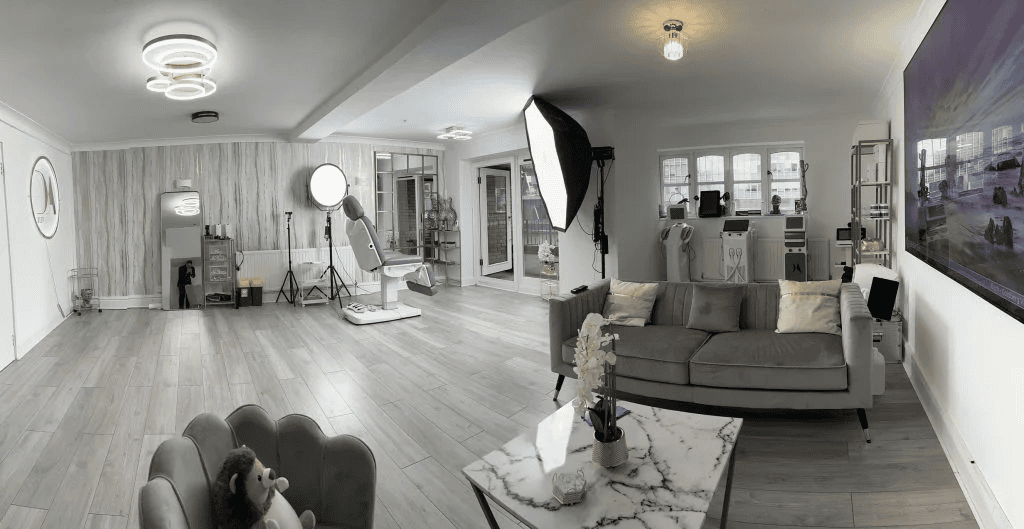
The device itself is only one part of the procedure.
When researching an aesthetics clinic London, consider factors beyond promotional before-and-after photographs.
Assessment, treatment planning and the experience of the person operating the technology also matter.
Deep Aesthetics provides aesthetic treatments from clinics in London and Birmingham and describes its treatment philosophy as individualised, with planning based on anatomy, proportion and realistic goals.
For Endolaser specifically, consultation should establish whether the concern relates primarily to skin laxity, localised fat or another anatomical factor before a procedure is recommended.
That approach is particularly important with technologies capable of addressing more than one tissue concern.
Final Thoughts
Endolaser represents an interesting development in minimally invasive aesthetic treatment.
For appropriately selected patients, it may provide another option for concerns involving mild-to-moderate skin laxity, localised fat and reduced facial or body contour definition.
But the technology should not be viewed as a universal alternative to surgery or as a treatment capable of producing the same outcome in everyone.
Successful aesthetic planning starts with identifying what is causing the concern, understanding what the technology can realistically address and choosing a practitioner prepared to discuss both its capabilities and its limitations.
Patients considering Endolaser in London or Birmingham can consult Deep Aesthetics to discuss their anatomy, treatment goals, suitability and available options before deciding whether the procedure is appropriate.
Deep Aesthetics Clinic Locations
London Clinic
Mirror Works
12 Marshgate Lane
London E15 2NH
United Kingdom
Map Location : https://share.google/krWvJJv3IB3Uq8yI7
Birmingham Clinic
25 King Edwards Wharf
Sheepcote Street
Birmingham B16 8AB
United Kingdom



Leave a Reply