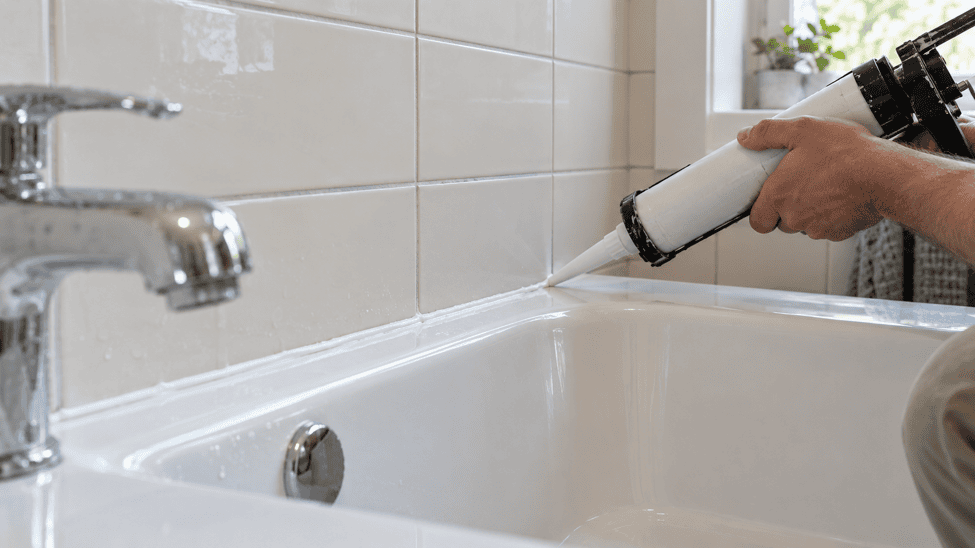
Caulk and grout belong in different parts of your bathroom, and bathrooms need both. Grout fills the spaces between tiles, while flexible caulk seals joints where surfaces meet or movement is expected.
If you are staring at a cracked shower corner, choosing the right repair can feel confusing. The location of the damage matters more than matching the color, because using the wrong material can leave you fixing the same spot again.
Where Grout Belongs
Grout is used between tiles across a flat wall or floor. It fills those joints and gives the tiled surface a finished appearance.
Most grout is rigid, so it is not intended to handle the movement that occurs at bathroom corners or fixture connections. Different grout products also have different cleaning and sealing requirements; check the manufacturer’s instructions before applying a sealer.
Where Caulk Belongs
Flexible sealant is generally used where tiled surfaces change direction or meet another material. These joints can move as temperatures change or fixtures carry weight.
Common locations include:
- Inside corners where two shower walls meet.
- The joint between wall tile and a bathtub.
- Connections between tile and a shower base.
- Sink edges that require sealing under installation instructions.
For wet areas, choose a sealant specifically rated for that location and compatible with the surrounding materials. Bathroom silicone is a choice, but the product label and fixture instructions should guide the decision.
How To Recognize A Repair Problem
Caulk that splits, peels away, or leaves gaps may need replacement. Grout that crumbles or falls out between tiles deserves attention, especially if tiles feel loose.
Discoloration alone does not always mean replacement is necessary. Surface dirt may respond to cleaning, while persistent staining or recurring growth can point to moisture that needs investigation.
If a corner keeps cracking after grout repairs, it may need a prepared flexible joint. Bathroom caulking services can assess these areas and determine whether damaged material or another issue is causing the failure.
Why Neither Replaces Waterproofing
Caulk and grout are surface finishes, but they do not replace the waterproofing system behind a tiled shower. Even intact joints cannot correct a missing or damaged underlying membrane.
A leak, soft wall, or damp ceiling below the bathroom needs more than a repair. Check the source before covering the area with new material.
What To Do Before Replacing Material
Remove failed material without damaging tile edges, fixtures, or underlying waterproofing. Clean the joint and allow it to dry before applying a replacement.
Avoid spreading caulk over loose grout or peeling sealant. The new material needs suitable surfaces to bond to, and covering a failing layer leaves that weakness underneath.
When comparing caulking services, ask which joints they will repair, what product they will use, and how long the bathroom must remain dry. Follow the specified curing time before showering, even if the surface feels dry sooner.
Afterward, use cleaners approved for the tile, grout, and sealant. Check corners and fixture joints for separation, and arrange an inspection if the same gap returns soon after repair.



Leave a Reply