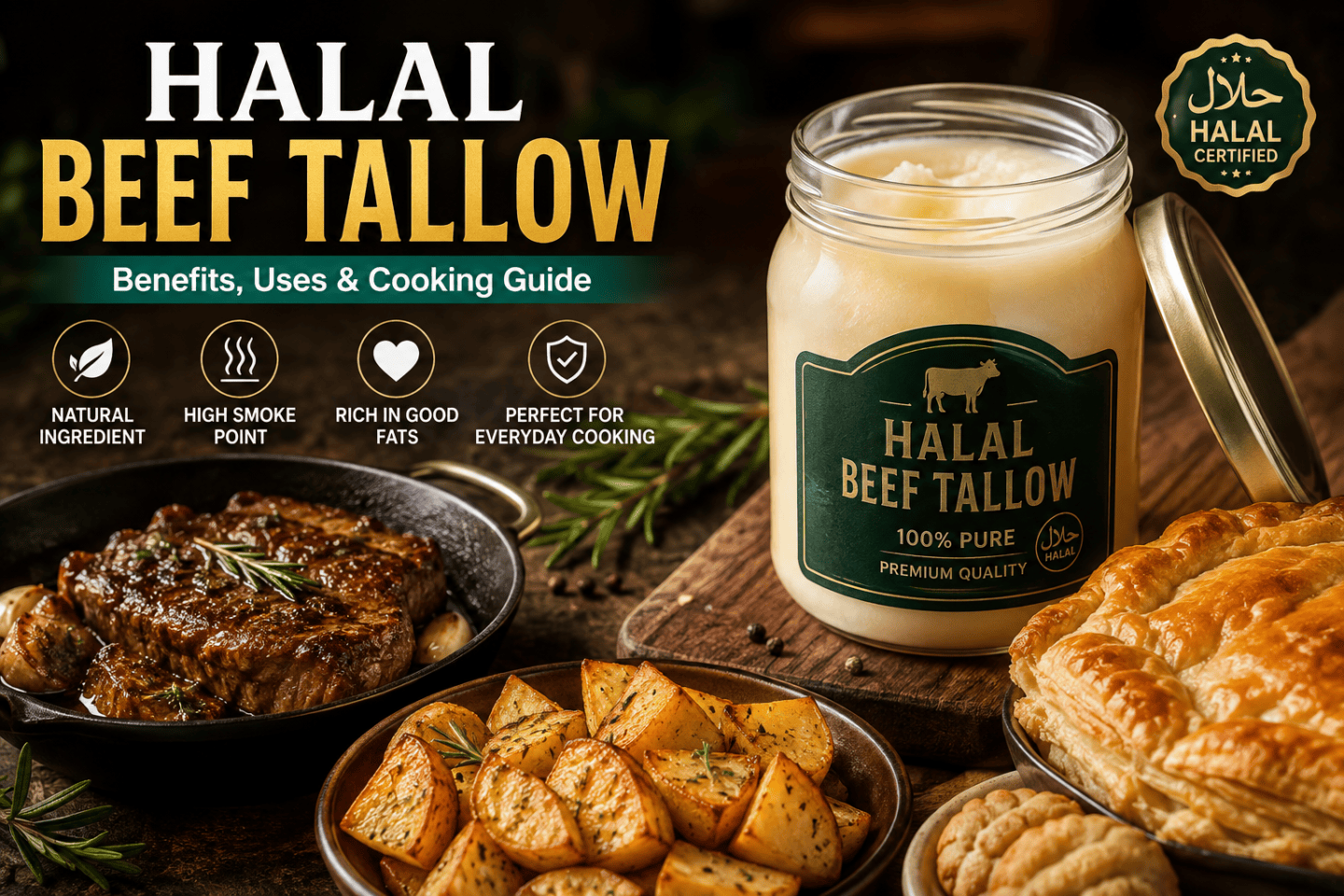
Halal Beef Tallow is gaining attention among home cooks who appreciate traditional ingredients and rich, natural flavors. Made by slowly rendering beef fat, tallow has been used for generations in frying, roasting, baking, and everyday cooking. Today, many people are rediscovering it as a versatile kitchen staple.
For those who follow halal dietary practices, choosing a halal-certified product can provide greater confidence about its source and preparation. From crispy potatoes to flaky pastries, beef tallow can bring a distinctive taste and useful cooking properties to many recipes. This guide explains its benefits, common uses, storage methods, and buying tips.
What Is Halal Beef Tallow?
Halal Beef Tallow is a cooking fat produced by rendering fat from halal-certified beef. During rendering, the fat is heated slowly until it melts, while moisture and solid particles are separated from the finished product.
Once filtered and cooled, the result is a firm, smooth cooking fat. High-quality tallow is generally pale white or cream-colored and has a mild savory aroma.
Traditional rendering can produce tallow with a simple ingredient profile, making it appealing to people who prefer straightforward cooking ingredients.
Benefits of Halal Beef Tallow
Beef tallow has several qualities that make it useful in the kitchen. One of its biggest advantages is its ability to perform well during high-heat cooking.
Some notable benefits include:
- Rich, savory flavor
- Good heat tolerance
- Versatility in cooking
- Long storage life when stored correctly
- Useful for frying and roasting
- Suitable for selected baking recipes
- Simple composition when traditionally rendered
Tallow also naturally contains different types of fatty acids and small amounts of fat-soluble vitamins. However, it is still a concentrated source of dietary fat, so portion control is important.
Why Choose Halal-Certified Tallow?
Halal certification can be an important consideration for consumers who follow Islamic dietary requirements. It provides information about whether the product and its preparation meet recognized halal standards.
When purchasing tallow, look for clear information about halal certification and beef sourcing. A reliable label can make it easier to select a product that matches your dietary preferences.
Some shoppers also prefer tallow made from grass-fed beef. While sourcing preferences vary, checking the product label can help you understand what you are buying.
Cooking Uses for Beef Tallow
The versatility of beef tallow is one of its strongest features. It can be used in several cooking methods and works especially well when recipes require higher heat.
Frying
Tallow is popular for frying because it can handle relatively high temperatures. It can help create a crisp exterior while giving food a rich savory taste.
Common foods prepared with tallow include:
- French fries
- Potato wedges
- Fried chicken
- Onion rings
- Fried fish
- Homemade snacks
Always monitor the cooking temperature and avoid overheating the fat until it begins to smoke heavily.
Roasting
Roasting vegetables with a small amount of tallow can produce browned edges and a satisfying texture. Potatoes are a particularly popular choice because the fat helps create a crisp outer layer.
You can also try it with carrots, sweet potatoes, cauliflower, and Brussels sprouts. Toss the vegetables lightly with melted tallow before roasting.
Baking
Although butter and shortening are common baking fats, tallow can also work in selected recipes. It has traditionally been used for pastries, biscuits, pie crusts, and savory baked goods.
Tallow can help create a firm and flaky texture. Since it has a more noticeable flavor than some vegetable fats, use it in recipes where a subtle savory note works well.
Halal Beef Tallow for Everyday Cooking
You do not need to replace every cooking oil in your kitchen to enjoy Halal Beef Tallow. Instead, use it when its flavor and cooking properties suit the recipe.
For example, a small amount can be useful when:
- Browning meat
- Roasting vegetables
- Frying potatoes
- Preparing savory pastries
- Cooking food in a cast-iron pan
- Making crispy side dishes
Using different cooking fats for different recipes gives you more flexibility in the kitchen.
How to Store Beef Tallow
Proper storage is important for maintaining the quality of tallow. After rendering, place the cooled fat in a clean, dry, airtight container.
For longer storage, refrigeration can help maintain freshness. Always use clean utensils when taking tallow from the container, and keep water or other moisture away from it.
Before using stored tallow, check its smell, appearance, and texture. If it develops an unusual odor or visible signs of spoilage, discard it rather than taking a chance.
How to Buy Quality Tallow
The quality of beef tallow can vary between products, so it is worth checking the label before purchasing.
Look for:
- Clear halal certification
- Simple ingredients
- Reliable beef sourcing
- Proper packaging
- Clean rendering
- Minimal unnecessary additives
Grass-fed beef tallow may be preferred by some consumers because of its sourcing, while others may focus mainly on halal certification and ingredient quality.
Choose according to your dietary needs, cooking preferences, and budget.
Is Beef Tallow Healthy?
Tallow can be included in a balanced diet, but moderation matters. Like other animal fats, it contains a significant amount of saturated fat and calories.
Instead of relying heavily on one type of fat, aim for variety in your overall diet. Vegetables, fruits, whole grains, legumes, lean proteins, and different healthy fat sources can all play a role in balanced meals.
If you have specific dietary requirements or health concerns, a qualified nutrition professional can help you determine how much dietary fat is suitable for you.
Beef Tallow and Honey Pack
The term Honey Pack may appear in searches related to food, wellness, or lifestyle products, but it is important not to confuse it with beef tallow.
Beef tallow is primarily a cooking ingredient. It is used for frying, roasting, baking, and other food preparation methods. Honey Pack can refer to a different type of product depending on the specific brand or item.
When choosing a cooking fat, focus on its ingredients, source, certification, storage requirements, and intended use.
Common Mistakes When Using Tallow
Using too much heat is a common mistake when cooking with tallow. While it performs well at higher temperatures, excessive heat can cause the fat to smoke and affect the flavor of your food.
Other mistakes include:
- Using wet utensils
- Storing tallow in an unclean container
- Leaving the container open
- Exposing it to excessive heat
- Using more fat than a recipe requires
Small changes in cooking and storage habits can make a noticeable difference.
Tips for Better Cooking Results
Start with a modest amount of tallow when trying a recipe for the first time. You can always add more if needed, but excessive fat can make food heavy.
For roasting, coat ingredients evenly rather than using a large amount. For frying, keep the temperature steady and avoid overcrowding the pan.
When replacing butter or shortening with tallow in baking, remember that the flavor and texture may change. It is best to test the substitution in a small batch first.
Conclusion
Halal Beef Tallow is a traditional and versatile cooking fat that can add rich flavor and crisp texture to many dishes. Its ability to work well with frying, roasting, and selected baking recipes makes it a useful ingredient for both traditional and modern kitchens.
When buying tallow, pay attention to halal certification, sourcing, ingredients, and storage instructions. Used in moderation, it can be part of a varied and balanced approach to cooking.
Whether you are making crispy potatoes, roasted vegetables, homemade pastries, or savory meals, Halal Beef Tallow offers a simple way to bring traditional cooking techniques and distinctive flavor into your kitchen.



Leave a Reply