Start with your usual journeys, passengers and boot space. These eight used cars cover town driving and family travel, so choose around your needs rather than the badge.
If you need car finance, set a deposit and monthly budget that leaves room for insurance, fuel, servicing and unexpected repairs.
An eligibility check can help you see the likelihood of approval for car finance before booking viewings. Confirm it uses a soft credit search, which does not affect your credit score, and remember that the result does not guarantee approval.
Then compare borrowing costs and repayment terms, get insurance quotes, and check each car’s condition, service invoices and maintenance history.
| Car | Versions worth considering | Main appeal |
| Honda Civic | 2012 to 2017, 1.8 petrol | Practical family hatchback |
| Mazda3 | 2014 to 2019, 2.0 petrol | Enjoyable everyday driving |
| Toyota Corolla | 2019 onwards, 1.8 hybrid | Automatic driving in traffic |
| Skoda Octavia | 2013 to 2020, petrol manual | Generous luggage space |
| Volkswagen Golf | Mk7, 1.4 TSI petrol | Comfort and easy controls |
| Ford Focus | Mk4, petrol, Zetec or Titanium | Balanced family transport |
| Toyota Yaris | New-generation 2020 onwards, hybrid | Town driving and parking |
| Kia Sportage | 2016 to 2021, front-wheel drive | Higher seating position |
1. Honda Civic
The older Honda Civic deserves more attention than it sometimes gets. If you need a family hatchback and want to spend carefully, start with a 1.8-litre petrol from the 2012 to 2017 generation. It suits mixed driving, although you will need to use the revs when overtaking. Take it onto a faster road and see whether you like the way it responds.
And check the view from the driver’s seat. If your parking space is tight, rear visibility and a comfortable driving position will matter every morning.
At this age, a tidy car with dated service invoices is a stronger prospect than one with unexplained gaps in its history. Try the air conditioning, inspect the tyres and listen for suspension noises over uneven roads.
2. Mazda3
The 2014 to 2019 Mazda3 is worth trying, especially if you enjoy driving. Start with the 2.0-litre petrol. A larger engine does not automatically mean excessive running costs, so compare insurance quotes and fuel use for the actual versions on your shortlist.
Its responsive handling gives the Mazda real appeal. Yet the ride can feel firm, which makes a test drive over rough surfaces worthwhile.
Take your usual passengers along, too. Comfortable back seats will earn their keep long after the novelty of attractive alloy wheels wears off.
3. Toyota Corolla
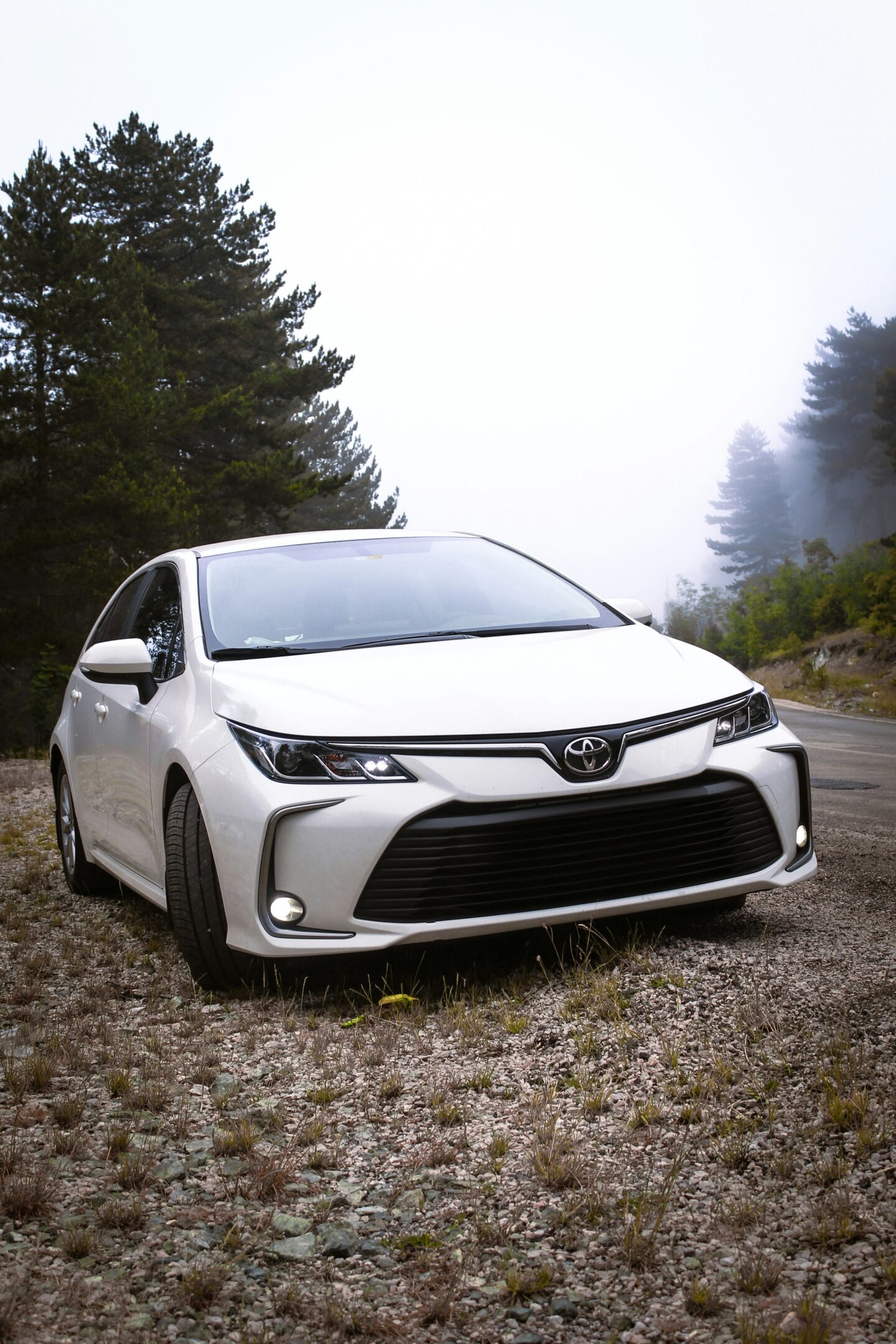
For commuting through traffic, the Corolla 1.8 hybrid is one of the strongest choices here. The automatic transmission takes away the constant clutch work, and the hybrid system suits journeys where you frequently slow down and move away again.
There is no need to plug it in.
Look at cars from 2019 onwards and compare their equipment and service records. The 1.8 offers enough performance for ordinary driving, while the 2.0 gives you more power. Unless you particularly want that extra performance, a better-maintained example deserves the money first.
During the test drive, accelerate firmly so you can judge the engine sound. Then try your pushchair or holiday luggage in the boot. Or consider the Touring Sports estate if the hatchback feels cramped; it gives you another route to extra space before choosing an SUV.
4. Skoda Octavia
The Octavia makes a persuasive case when luggage space comes first. In the 2013 to 2020 hatchback, you get a 590-litre boot with the back seats up, plus a large opening that makes bulky bags and children’s equipment easier to load. That practicality can make family life considerably easier.
A petrol manual is a sensible starting point for mixed local driving. If you regularly travel longer distances, a diesel is worth comparing, although frequent short journeys can cause problems with its soot filter. Choose around your routine.
Look closely at mileage records, seat wear and service invoices on any example that has worked hard. With an automatic, confirm the maintenance requirements for its exact gearbox and drive it from cold. Useful space and comfortable transport are the reasons to buy an Octavia, so expensive trim upgrades can come further down your priorities.
5. Volkswagen Golf
Some cars take a while to feel familiar. The Mk7 Golf usually makes that process easy, with a comfortable cabin and straightforward controls. If you like adjusting the heating without searching through touchscreen menus, its layout has lasting appeal.
Start with a 1.4 TSI petrol for everyday driving. It provides useful performance without taking you into the cost of a sporty model, while later 1.5 TSI versions are worth comparing if you can spend more.
But stay disciplined about the asking price. Compare similar engines, mileages and service histories, because the Golf badge can encourage ambitious pricing.
An ordinary specification with sound tyres, brakes and maintenance is a better prospect than a glamorous example needing immediate work. If you want a DSG automatic, check for hesitation or judder when pulling away and reversing, then confirm the servicing requirements for that gearbox.
6. Ford Focus
The fourth-generation Focus, introduced in 2018, is worth trying if you want comfortable family transport and enjoy a country-road drive. Zetec and Titanium versions are sensible places to start, with useful equipment taking priority over a sporty bodykit.
Spend time finding a comfortable seating position. Then drive over surfaces you encounter every week, especially if you are considering an ST-Line with sports suspension.
Service evidence matters particularly with an EcoBoost petrol. Ask a Ford dealer or specialist to confirm the exact engine’s belt or chain arrangement, its maintenance schedule and any work coming due; these details vary across versions.
So favour clear records. A tempting price offers little comfort when overdue maintenance arrives straight after purchase.
7. Toyota Yaris
If most of your driving means town traffic, short commutes and supermarket parking, the Yaris hybrid deserves a close look. Its automatic transmission makes busy journeys easier, while the compact body helps when spaces are tight.
Choose the generation introduced in August 2020. A 2020 registration alone will not identify it, since older-generation cars were also registered that year.
The boot holds 286 litres with the rear seats up, which should handle ordinary shopping. For holidays, test your own bags before buying. And sit in the back if you regularly carry adults, rather than judging the whole cabin from the driver’s seat.
For somebody travelling alone or as a couple, the smaller cabin may be a worthwhile trade-off for easier parking. Check the service history and every fitted camera, sensor and dashboard function. Equipment you use daily deserves priority over cosmetic extras.
8. Kia Sportage
The 2016 to 2021 Sportage makes sense if you value a higher seating position and easier access. Try getting in and out, fitting child seats and loading the boot to see how much it improves your routine.
Front-wheel drive is the sensible starting point for keeping costs down. The non-turbo 1.6 petrol can feel slow with passengers and luggage, while the turbo version offers stronger performance alongside higher fuel bills. Test the version you intend to buy.
Later cars may retain some of Kia’s transferable seven-year warranty. Check the registration date, servicing compliance and exclusions, remembering that cover beyond the first three years is limited to 100,000 miles.



Leave a Reply