Hair toppers and wigs both offer people a way to change how their hair looks, but they solve different problems. A customer who wants extra coverage around the crown may not need a full wig. Someone seeking coverage across the whole scalp may find a topper too limited. For salons and retailers, helping customers choose between the two is an opportunity to provide a more useful service and build trust.
The best option depends on the customer’s coverage needs, preferred style, comfort, budget and daily routine. A topper is designed to blend with existing hair and add coverage or volume in a specific area. A wig covers the head more fully. Neither product treats the cause of hair loss or makes hair regrow. The right conversation starts with what the customer wants from the product, not with a one-size-fits-all recommendation.
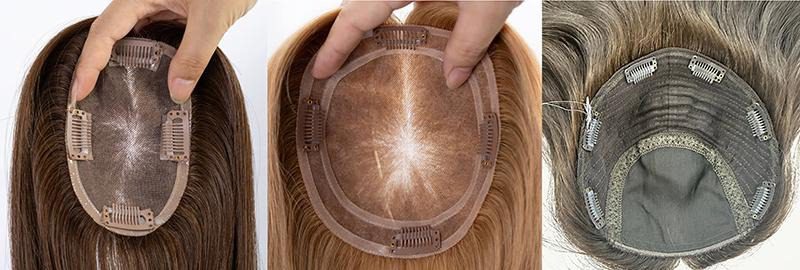
What Is the Difference Between a Hair Topper and a Wig?
A human hair topper is a hairpiece designed to cover a particular area, such as the part or crown, and blend with the wearer’s natural hair. Depending on the design, it may be secured with clips or another attachment method. A wig is designed to cover most or all of the scalp and can be worn over existing hair or a close-fitting cap.
That difference affects how each product looks and feels. A topper leaves some natural hair visible, so colour, texture and length need to blend well. It may be a good fit for someone who wants targeted coverage or added volume without covering all of her hair. A wig offers broader coverage and a more complete style change, which can suit customers who want a consistent look across the head.
The NHS notes that people may choose among wigs, hair extensions, scarves and other ways of covering hair loss. Macmillan Cancer Support explains that hairpieces can thicken thin hair or cover small areas, but they generally require enough remaining hair of a suitable length for attachment. These differences matter during a consultation, because a product that works for one pattern of thinning may not work for another.
Which Option Offers the Coverage a Customer Wants?
Coverage is often the simplest place to begin. A customer concerned about a widening part or thinner crown may want to compare a topper with styling products or a different haircut. A customer who wants full coverage may prefer a wig. Some customers may try both options for different occasions or stages of life.
A salon or retailer can ask where the customer wants more coverage, how much of her natural hair she wants to keep visible and whether she wants to change her hairstyle. The answers can help narrow the options without making assumptions about the reason for her hair changes. If the customer is worried about ongoing hair loss, the business should encourage her to seek medical advice rather than trying to diagnose the cause.
The fit also depends on the customer’s existing hair. A topper must blend with the hair around it and attach securely. If the remaining hair is very short, fragile or sparse in the attachment area, a topper may be unsuitable or uncomfortable. A wig may provide a more practical form of coverage in that situation. The customer should be able to try the product or receive qualified fitting guidance before making a decision.
How Do Comfort, Styling and Daily Use Compare?
A silk topper can feel familiar to someone who wants to keep much of her own hairstyle. It may require blending, styling and attachment each time it is worn. Customers should understand how to put it on, remove it and care for both the piece and their natural hair. An attachment that pulls or feels unstable can reduce comfort, so fit and gentle handling matter.
A wig can simplify the look because it covers more of the head and comes as a complete style. But customers may need to learn how to secure it, care for the cap and manage warmth or fit. Hair loss patterns, head shape, skin sensitivity and personal preference can all affect comfort. One product is not automatically easier for everyone.
The customer’s routine can guide the recommendation. Someone who wants a piece for occasional events may value a different design from someone seeking a product for regular daily wear. A person who wants to keep her own hair visible may favour a topper, while a customer who wants a ready-made full style may prefer a wig. Product demonstrations and honest information about care can make these trade-offs easier to assess.
What Should Customers Consider About Cost and Maintenance?
Price depends on materials, construction, customisation and the amount of styling involved. A topper may cost less than some full wigs, but that is not a universal rule. A customer may also need styling appointments, colour matching, care products or replacement pieces. The total cost of ownership matters more than the initial price alone.
Maintenance can differ as well. Both options need suitable cleaning, storage and careful styling. Some human-hair products allow more styling flexibility but usually require more care. Synthetic options may be simpler to maintain but have different styling limits. Retailers should give product-specific care guidance rather than assuming that all toppers or wigs behave the same way.
The American Academy of Dermatology explains that wigs and concealers can offer immediate cosmetic results, but they do not slow hair loss or regrow hair. Clear descriptions help customers understand what they are buying and avoid confusing appearance support with medical treatment.
How Can Retailers Help Customers Choose Confidently?
Retailers can begin with a private, unhurried consultation. They can ask the customer what she wants to achieve, then explain the differences in coverage, attachment and styling. A colour comparison under natural-looking light, a fitting demonstration and views from several angles can help customers judge how a product may look in everyday use.
Staff should avoid promises such as “invisible for everyone” or “perfect for all hair loss.” Results depend on the person’s hair, fit, colour and styling. It is more useful to explain where each option works well, where it may be challenging and what support is available after purchase. Staff should also know when a health concern needs to be referred to a GP or dermatologist.
Retailers can carry a focused selection of demonstration products and order less common combinations when needed. This approach gives customers a chance to compare choices while limiting the cost of holding every colour, length and construction in stock. Follow-up support, transparent return terms and clear care instructions can complete the experience.
Conclusion
Hair toppers and wigs serve different coverage needs. Toppers can suit customers seeking targeted coverage while keeping some natural hair visible; wigs offer broader coverage and a complete style. A thoughtful consultation helps customers compare fit, comfort, care and cost, so they can choose the option that best matches their preferences and routine.



Leave a Reply