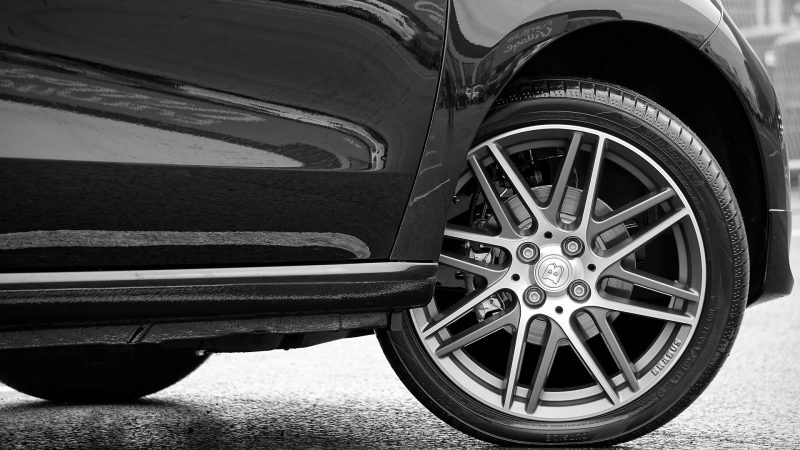
Changing a car tyre is an increasingly rare skill amongst motorists in this day and age, as a recent survey indicated; of 2,000 drivers polled, over 70% of 18-23 year olds did not feel confident changing a tyre. There are many reasons you may need to change a tyre, beyond a puncture: you might have noticed extensive sidewall cracking that could lead to tyre failure, or maybe your tyre’s tread is below the legal depth of 1.6mm. To save you the cost of a mechanic’s labour, here is a step-by-step on how to change a car tyre.
Before you go any further, it is important to note exactly what we mean by changing a car tyre here. Removing and replacing a tyre from your car’s wheel requires specialist tools, and should be left to a professional mechanic. The process here describes the removal of your car’s wheel, and replacement with a spare. We colloquially call it a spare tyre, but it is in fact the wheel you are replacing – often with a temporary wheel for short term use, until a professional can re-fit a new tyre to your car wheel.
Preparations
Before you begin, you will need to gather the requisite tools for changing your tyre. These include socket wrench, breaker bar, hydraulic jack, plank of wood, your car’s manual, wheel chocks and a dish of some sort to keep parts in. You will also need a spare tyre. Many cars come with an emergency spare in the boot, but if you want another, or a longer-lasting non-emergency spare, then buy tyres online to ensure you have stock.
There are several steps in the tyre-changing process that you will need to complete before even thinking about lifting the car. Firstly, ensure your handbrake is engaged and secure, and then place wheel chocks in front of the wheels you won’t be changing. These two safety measures will prevent your car rolling forwards or rocking too heavily while you are working on it, preventing damage to the wheelbase and to you.
While the car is still on the ground, take the opportunity to loosen the wheel nuts; you may need a breaker bar, and your body as leverage to ‘break’ the bolts loose. It is far safer to loosen the bolts while all four wheels are on the ground, and the car is secured in place.
Jack the Car Up
You are now ready to lift your car. Place your jack under the chassis frame next to the tyre in question, on top of a flat surface such as a wooden plank; there will be dedicated points under the car specifically for jack-lifting purposes, often in the form of metal plates welded to the chassis. Use the nearest plate to the tyre you’ll change, and jack the car up until the bottom of the tyre is 15cm clear from the ground.
Replacing the Wheel
It is now time for you to replace your car tyre. Remove the loosened wheel nuts completely, taking notice of their orientation for when you replace them. With all the wheel nuts off, you can now remove the wheel. It may be a little stiff at first, but with a bit of elbow grease it should slide straight off the axle. Retrieve your spare, slide it on, and replace the wheel nuts, taking care to tighten only slightly.
Finishing Up
Lower the car back down to the ground and remove the jack. Now you can tighten the wheel nuts properly, either using the breaker bar for leverage or using a power tool to generate torque. Remove the chocks, and you are finished. All that is left is to check your new tyre’s pressure and pump it up to pressure accordingly!



Leave a Reply